
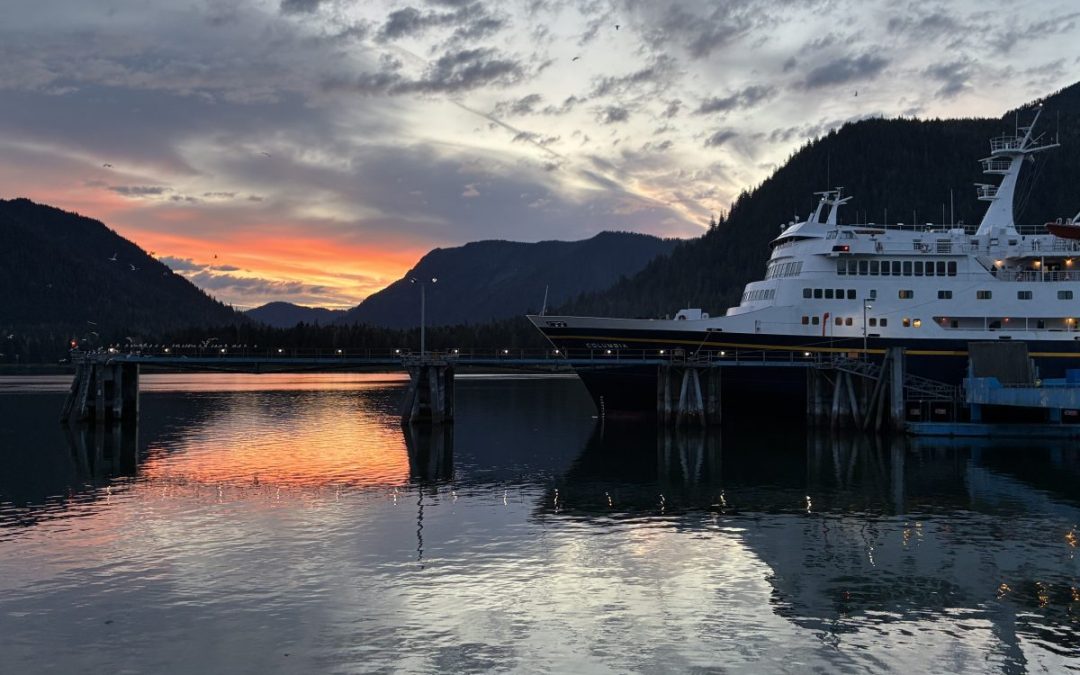
The 52 year old Alaska ferry Columbia nudges into Petersburg’s dock at 9:45pm Tuesday evening. To make the trip to Bellingham, it needs to capture two narrow passages at slack high tides: one here in the Wrangell Narrows and a second at the Seymour Narrows near Port Campbell, BC so this will be a long run south. I’ll make two complete circuits to Tucson within the next 10 weeks moving stuff…..stuff that now owns me. I’ve lots of projects on Katahdin including rebuilding a tow winch, installing a boiler flue, and stepping two masts…..so roll up your sleeves……
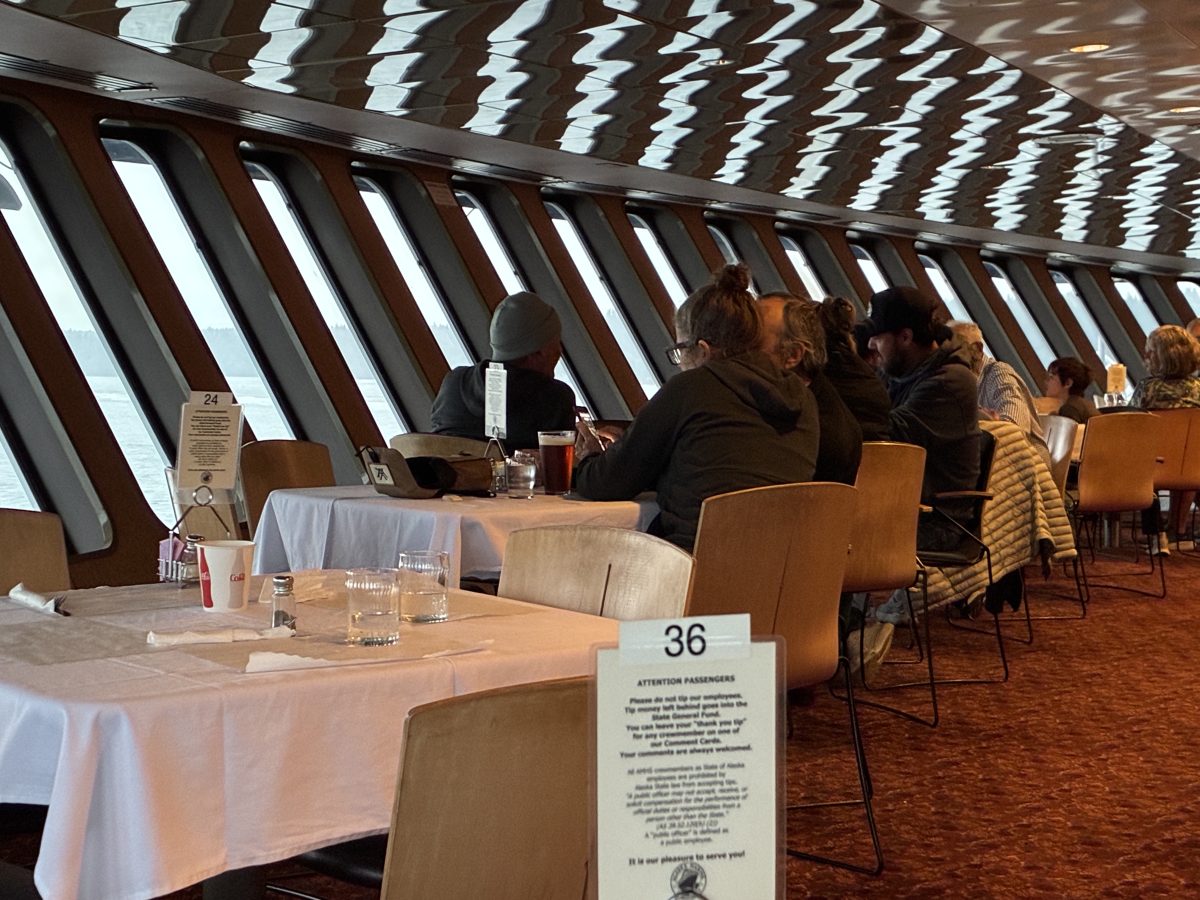
But first, let’s talk a little bit about the customer service on the Alaska Marine Highway System (AMHS), and the entitlement of fellow passengers. I love this ferry trip and have taken it approximately 50+ times in as many years. And I’ve driven this route 4 times in my 1899 tug. There is no finer way to dine than drifting down Finlayson Channel, BC enjoying…..chicken McNuggets out of a can. Yes, that’s what they served my first night (on the northbound). So, yes, I’m a stickler for service. This time I got lucky with salmon–gently cooked for four hours sitting under a heat lamp; Tlingit fireside style. There is no table service until I get up and ask the three waiters who are bantering away about something other than their job. Native hire–and yes, it’s probably not PC to say this.
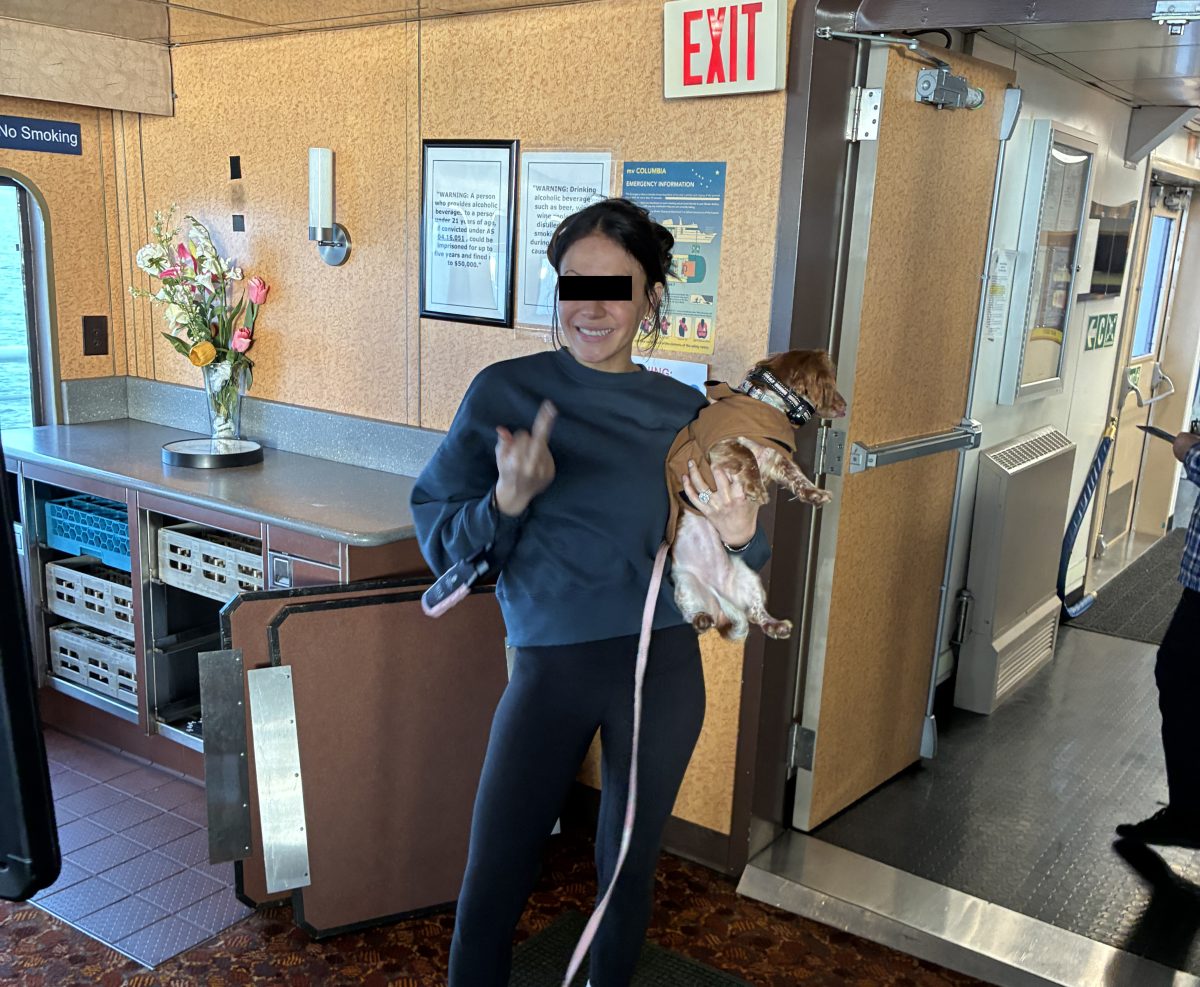
OK–then this dog starts barking–really yapping and disrupting my expensive meal (this trip costs me about $2000 which includes a truck). I politely ask the maitre ‘d what all the ruckus is about and discover a dog running around the dining room “Oh, we can’t ask, she replies–it might upset them further…..” but I can….. and I do. This photo illustrates the not so polite response. I pen out another letter to the AMHS asking for a refund. OK…..after arriving in Bellingham, I’ve better things to focus upon……
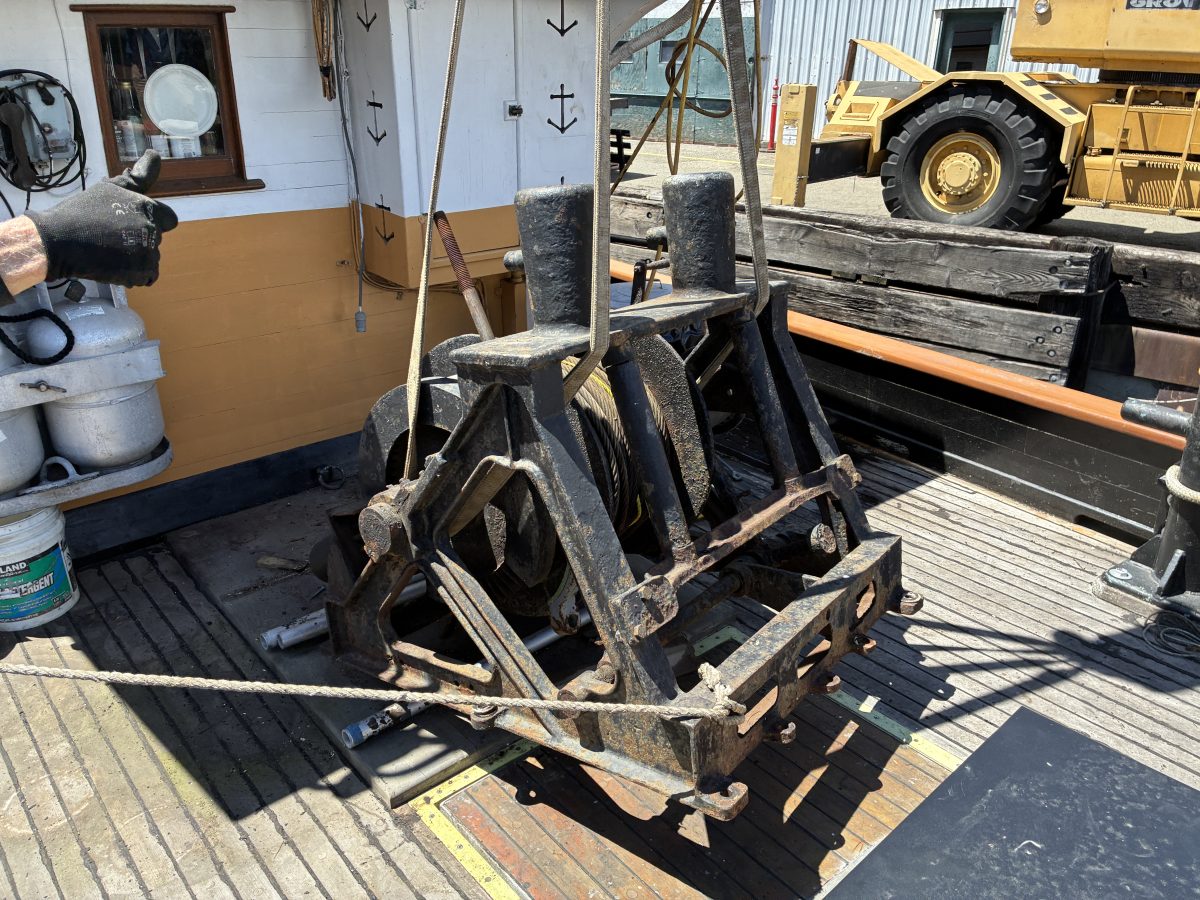 First order of business is to remove the tow winch on Katahdin. Everything is frozen up and when I use the capstan, the whole cable drum flops around–dangerous! So, off it comes.
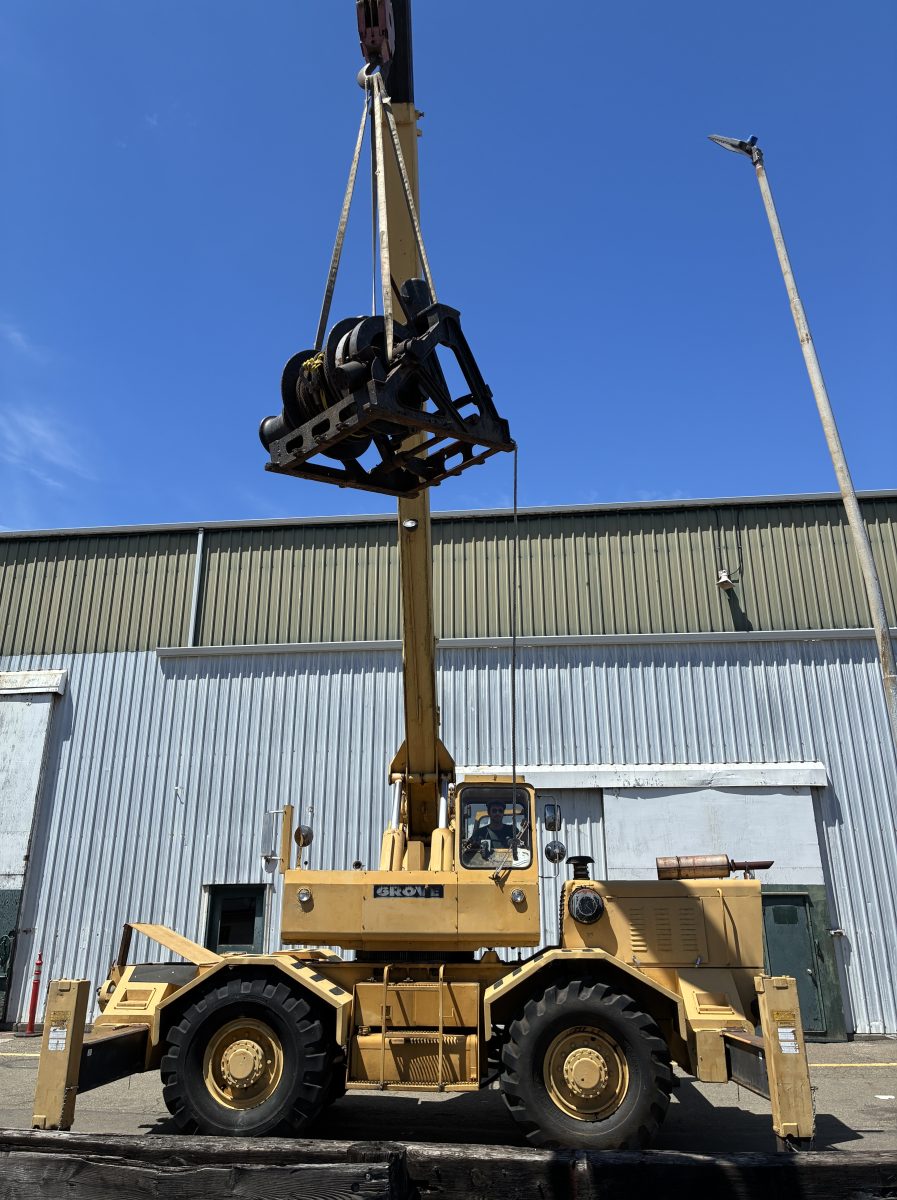 Chief Engineer on Katahdin is Jimmy Luper–master of all things mechanical–and he borrows Mike Wollostone’s mobile crane and we lift it onto his 1929 Model A Ford 2-1/2T pickup……plunk!
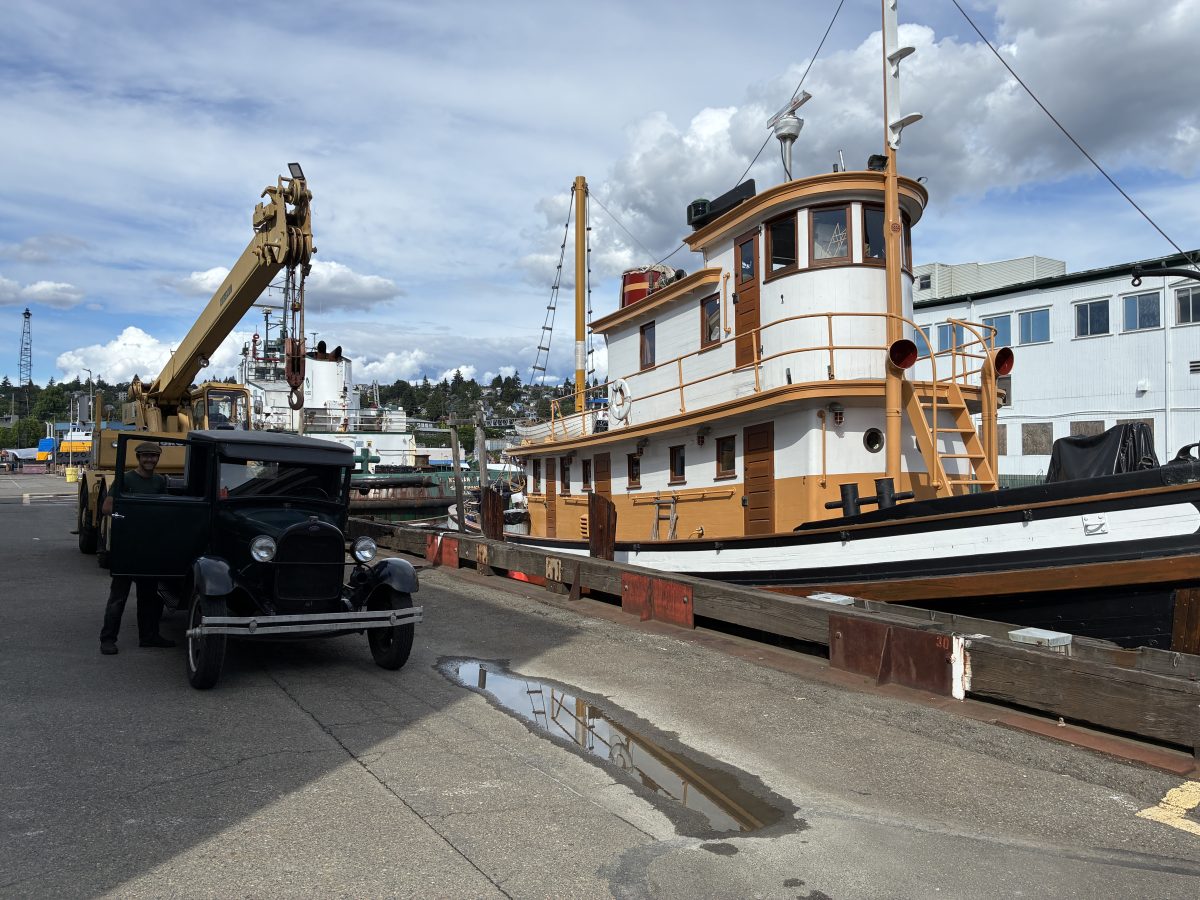 After this phase, two masts are dropped into place: 1.) The new aft mast, fabricated by Ballard Marine Fabricators–now made of aluminum which will boast a 3′ finial at the top painted white when completed. We fasten everything down with the ratlines (ladders). Still a ways to go, but a quantum leap in one day! BMF is a great small and responsive fabrication shop–three owners/fabricators–that can make anything happen. Thanks Matt and staff.
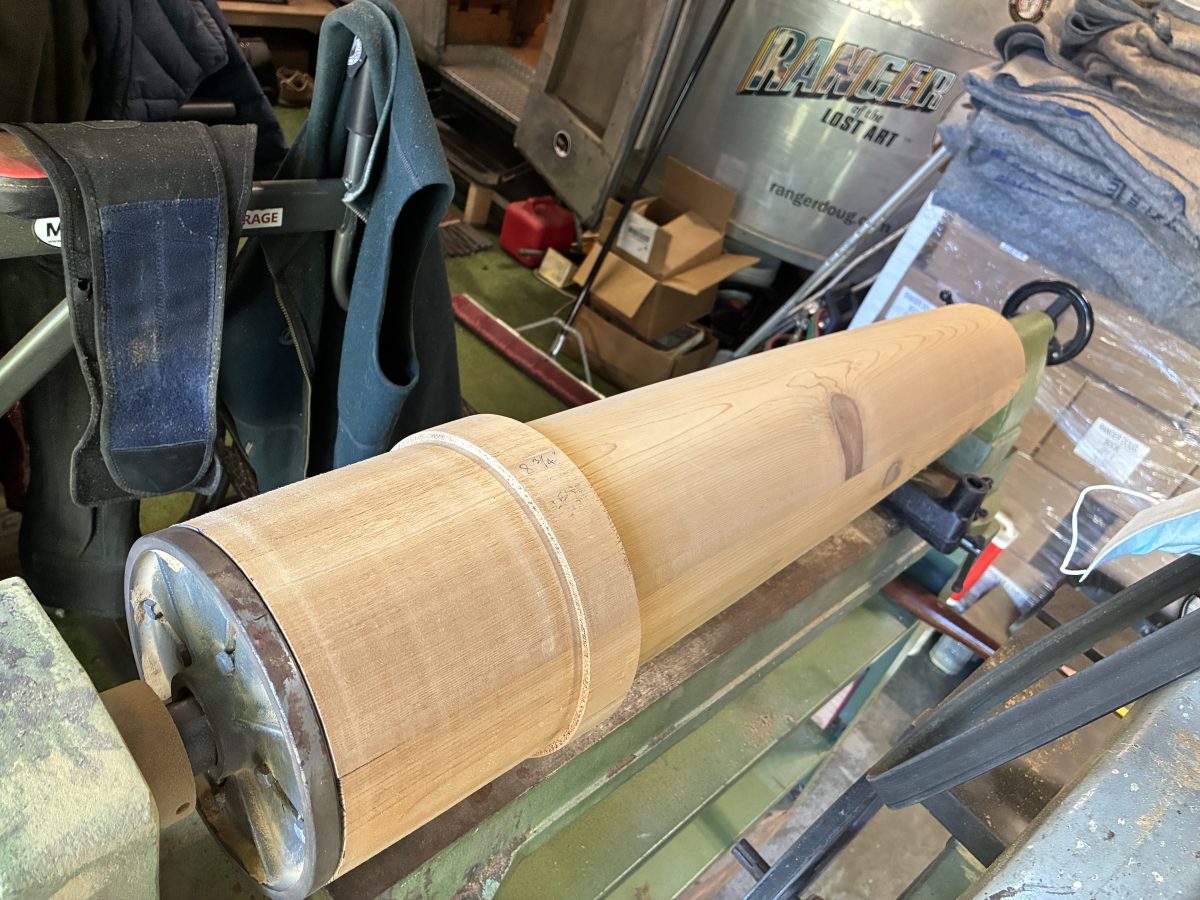 Here’s the finial–woodworkers wanted over $1000 to turn this, so I bought a lathe for $300 and turned it myself in 2 hours and I now own a lathe! This will fit into the top of the mast like a cork in a bottle–painted white with a pie-pan lid over the very top.
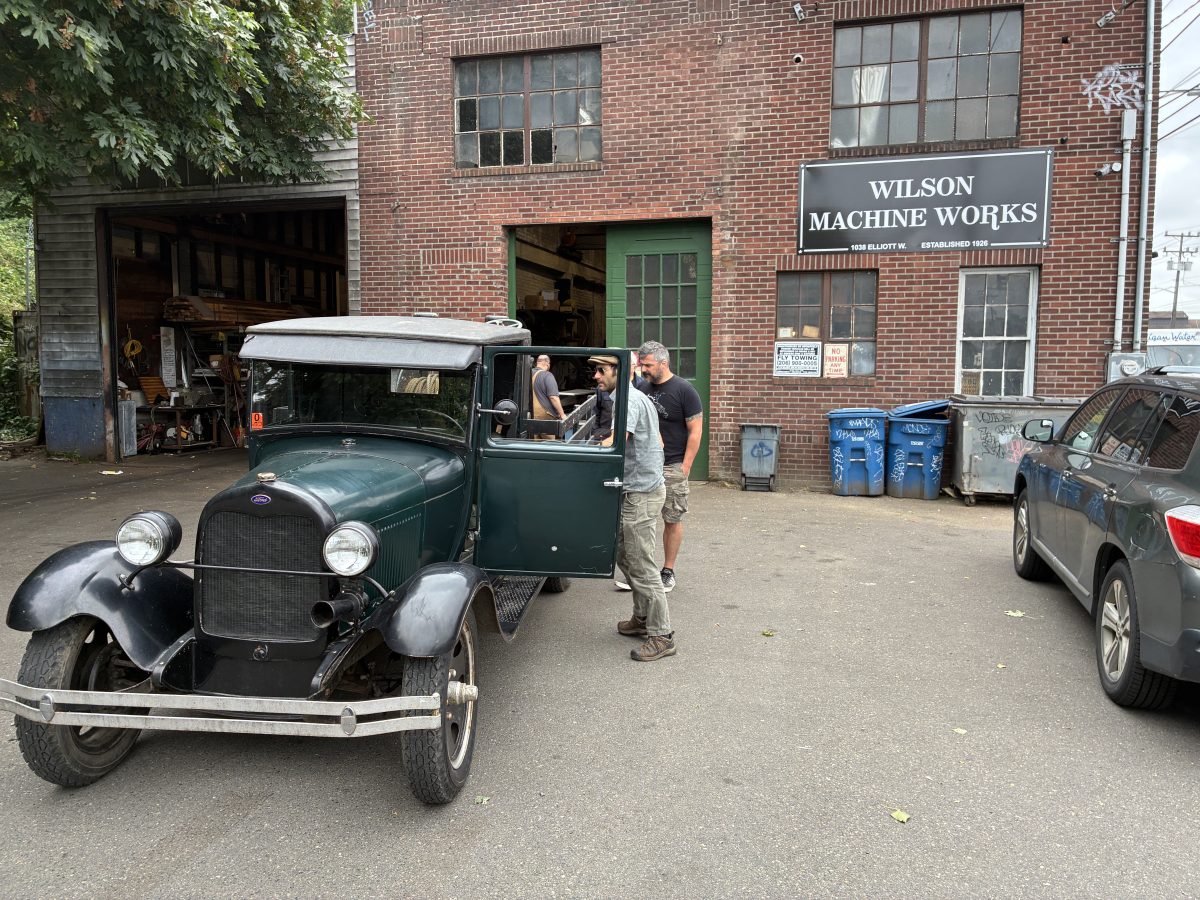 Here we arrive at Wilson Machine in a 100 year old Ford, carrying a 100 year old winch off a 127 year old tug. Dave Wilson is third generation machinist at this same spot which was founded in the late 1880s when Puget Sound ran right up to this building. The Seattle Times did a wonderful article on this shop which you can read here.
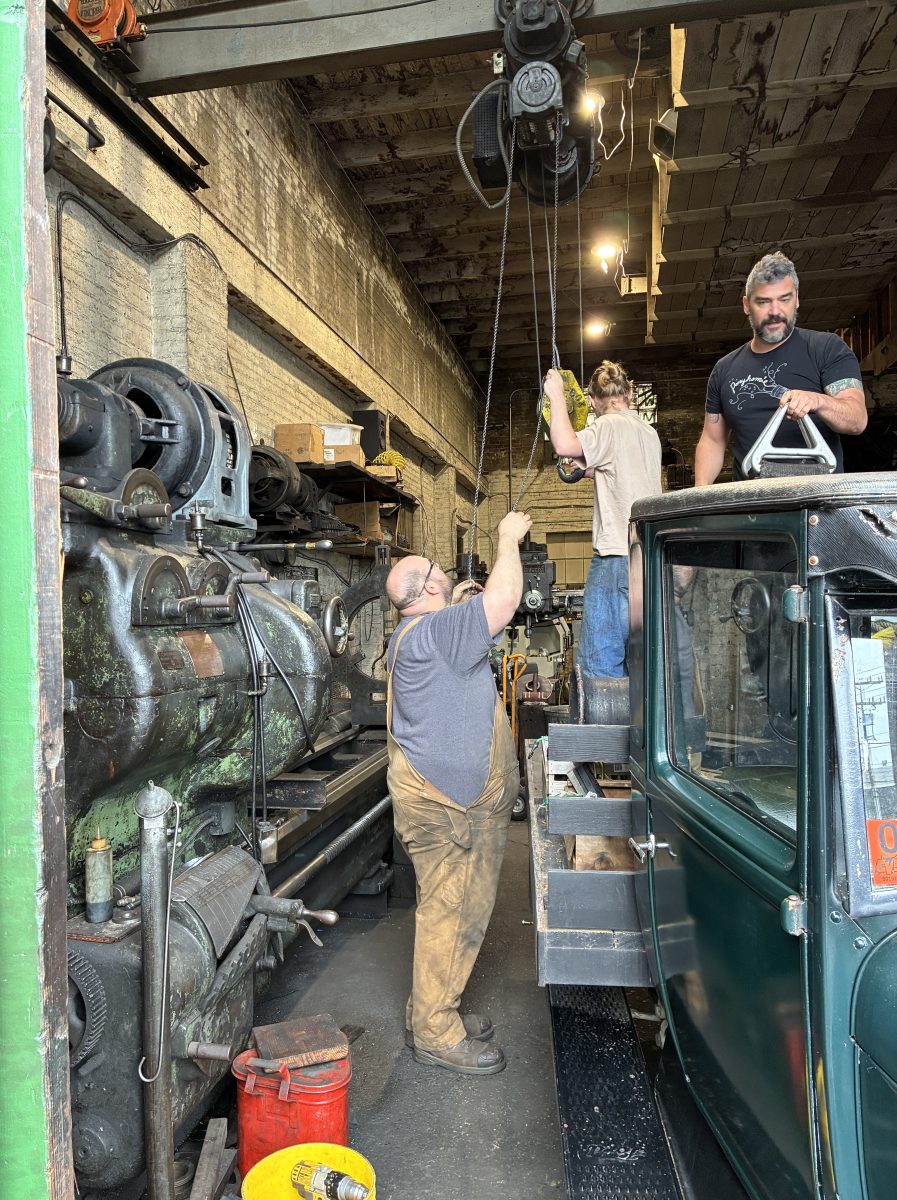 Here it is carefully winched off the truck. Max, Dave’s son, stands right and is carrying on this family tradition. This is what makes Seattle a great city.
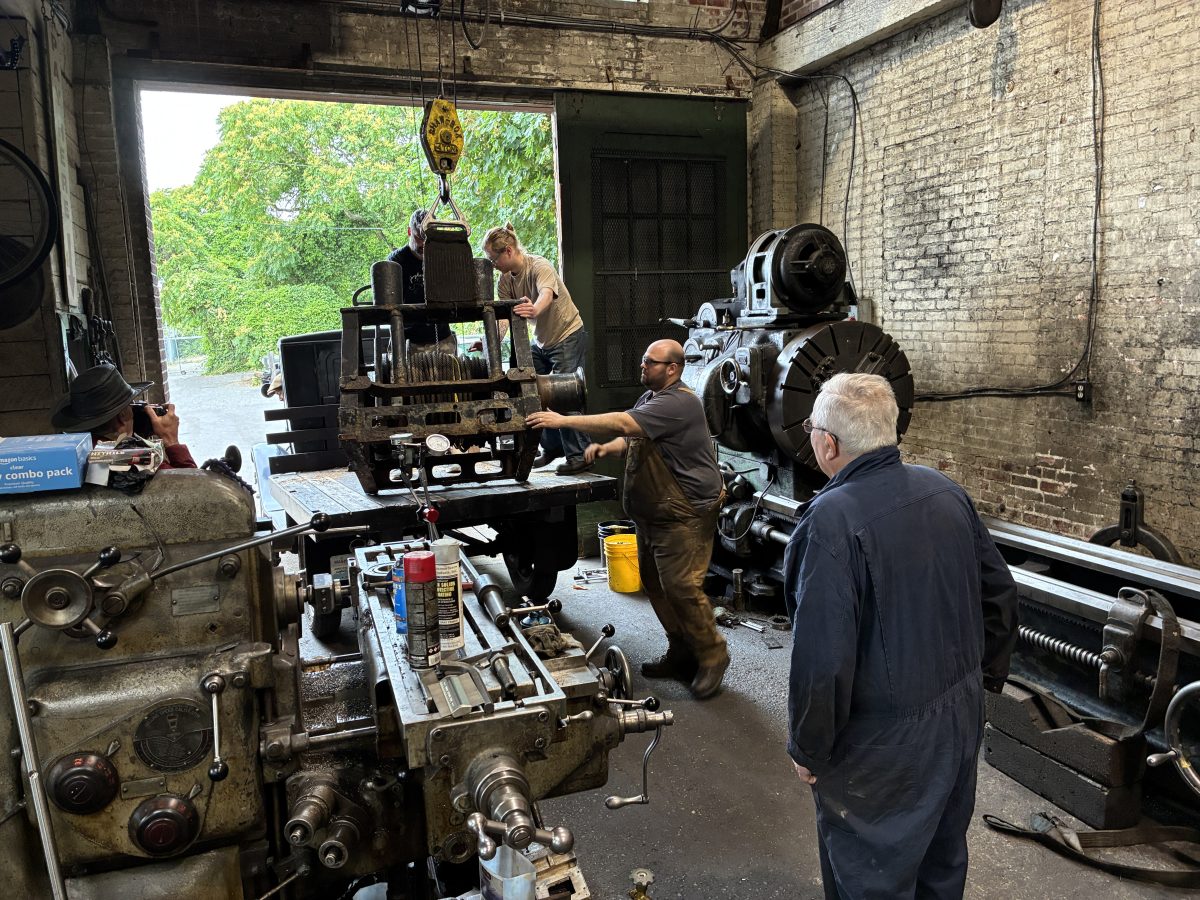 Dave Wilson looks on at the unloading process–beyond is the Mother-of-all-Lathes on the far wall! We’ll turn the cable drum on this later…… BTW, we all guessed at the overall weight of this winch. My guess was 1250 lbs. but it was over twice that amount at 2500 lbs. When lifted off the Katadhin’s stern, the waterline jumped about 2″.
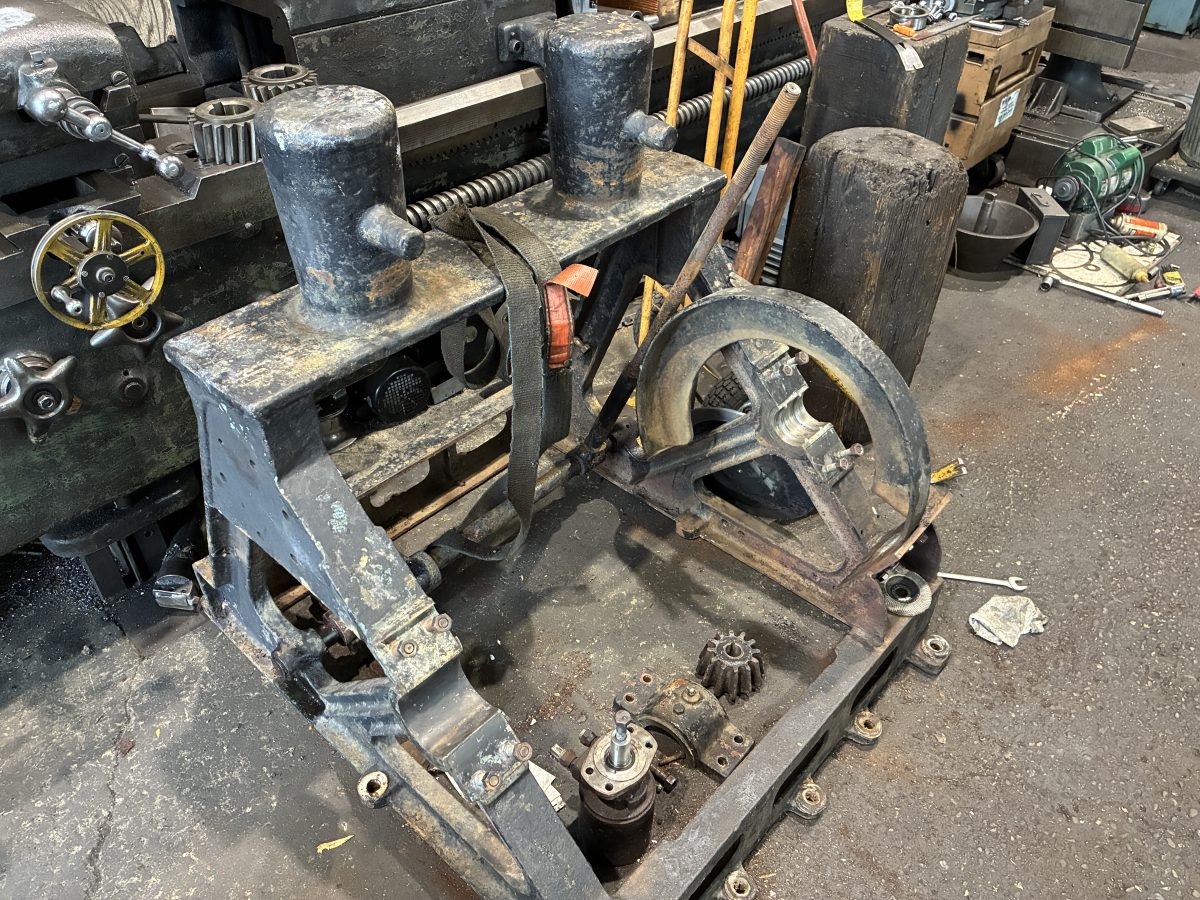 After disassembly. With most old tugs which are converted to yachts, this is a one way move–but I want to keep Katahdin original and still able to tow for a future museum (see this earlier post) so this winch will be rebuild and reinstalled back on Katahdin. Sadly you’ll see many tugs with sliding glass doors on the aft house–a terrible decision…..but not on Katahdin!
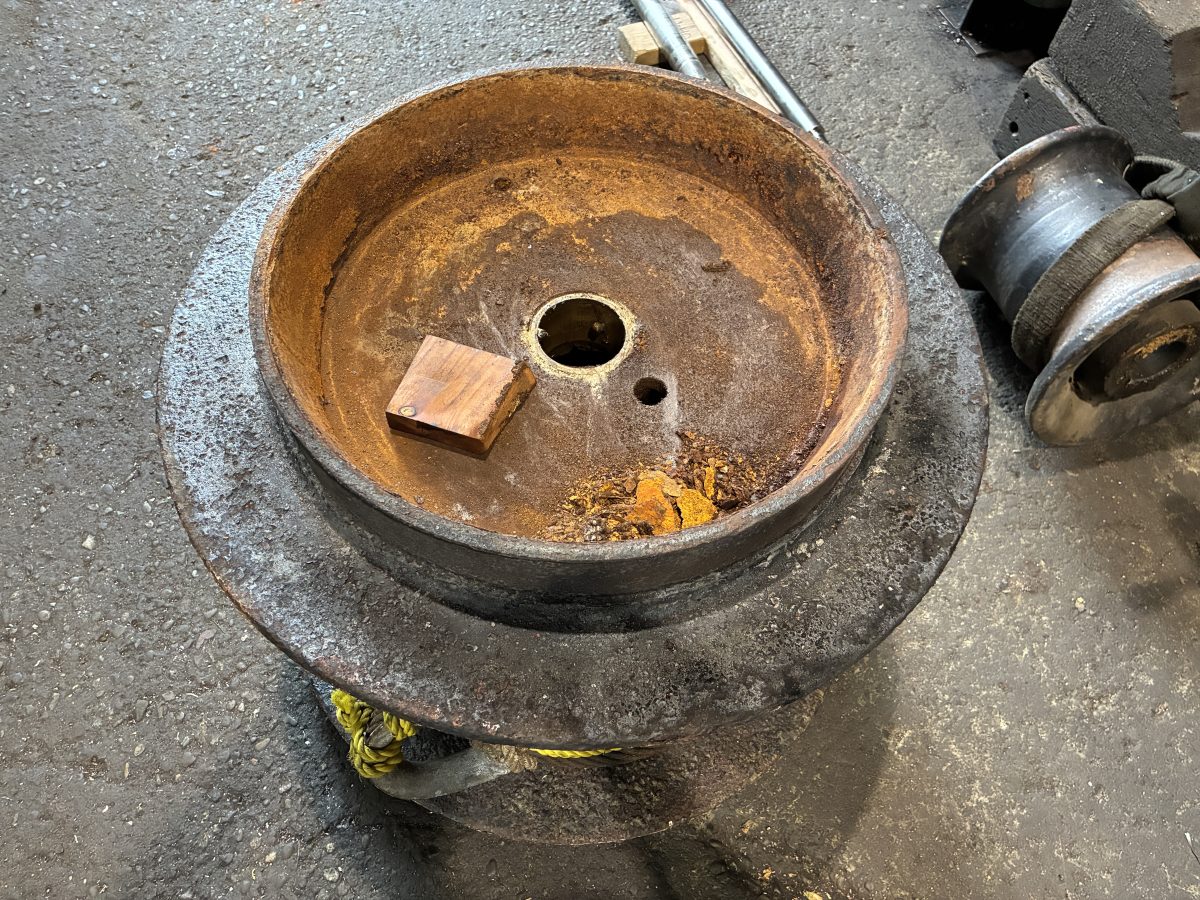 This was the issue–a cone clutch, common in this era, was frozen onto the cable drum. Lots of heat and a hydraulic press coaxed this apart. The capstan sits to the right. This is as far as I’ve gone but will post photos of the assembly and reinstallation in Part II of this post.
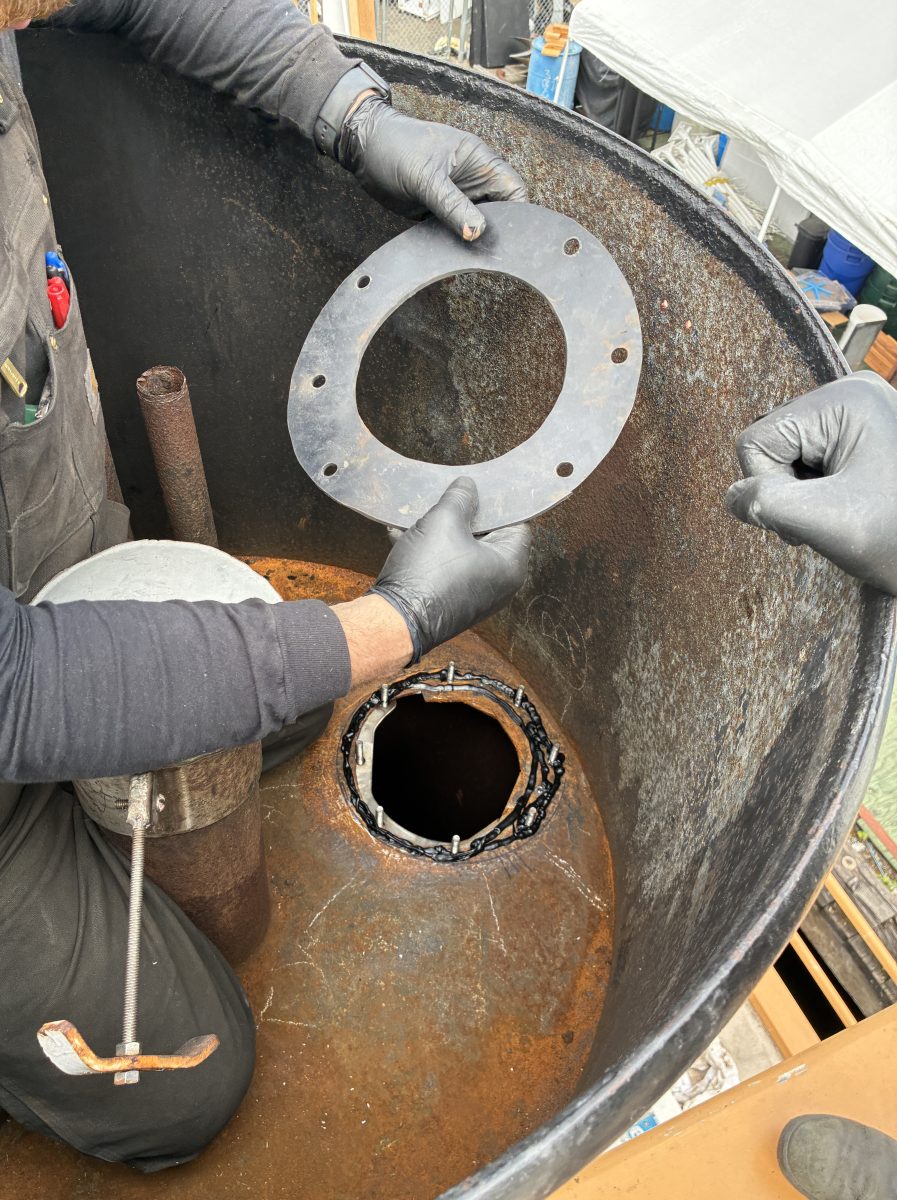
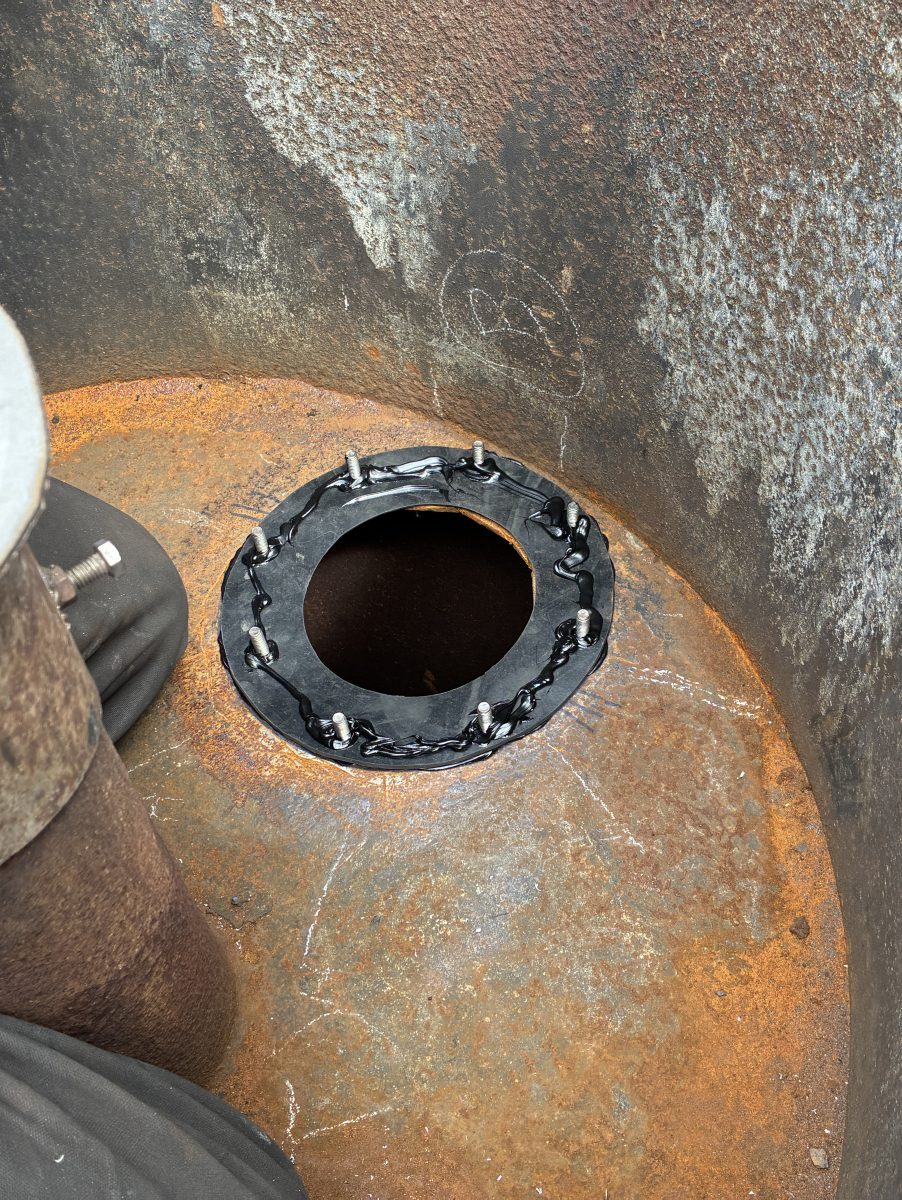
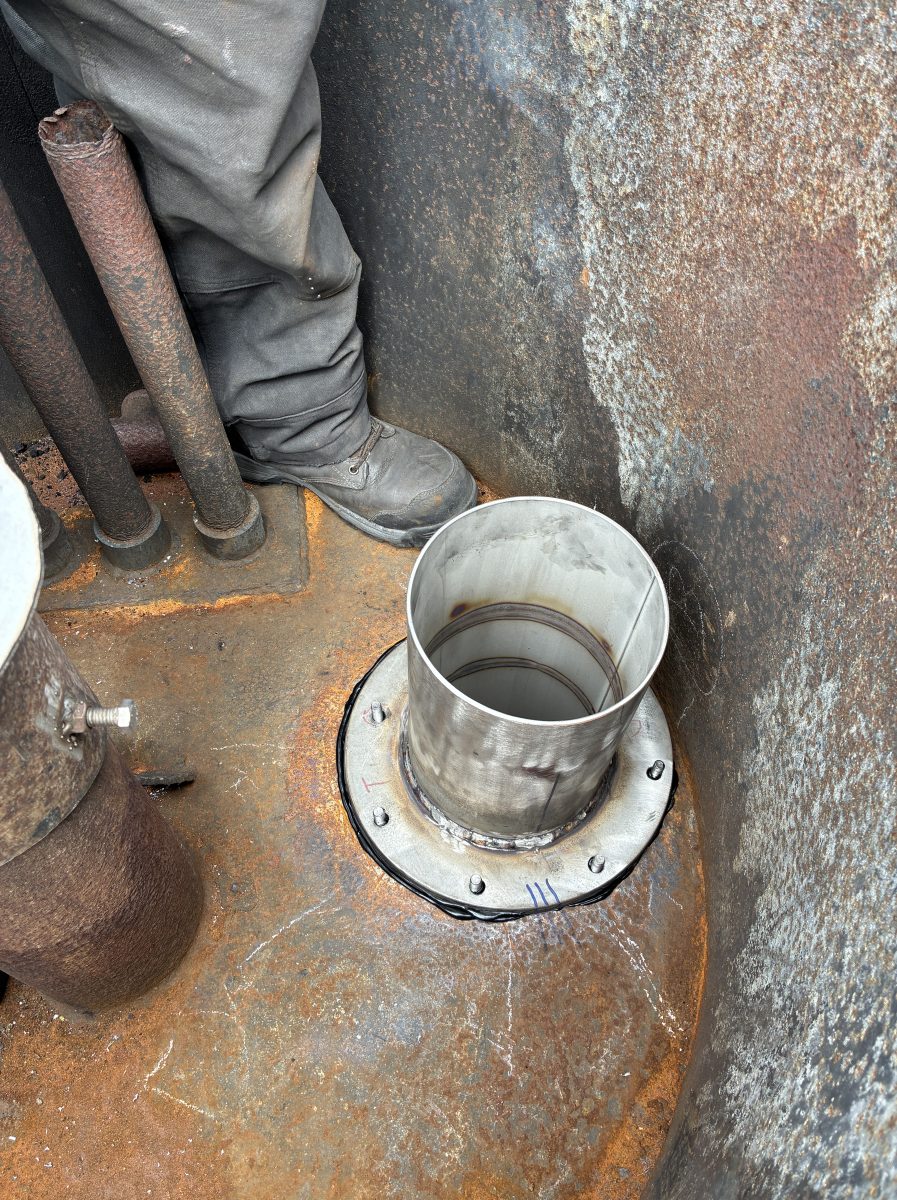
The second big project was replacing my boiler flue with a stainless steel one. Specs called for a 6″ flue. The old mild steel 5″ diameter flue rusted up and choked off the draft, once causing a flare-up, broken fired-oor and a huge flame. This was no easy task and we couldn’t weld without a huge permitting process which an 1899 tug probably wouldn’t pass. Thirty years ago, Dan Mains and I welded this 5″ first edition flue on a single Saturday morning. Red tape prevails today, but perhaps necessary and now it’s right! All credits to Ballard Marine Fabricators.
So, I designed a split backing ring with bolts welded to it and each half which could then be passed through the hole with the receiving bolts poking back up through pre-drilled bolt holes (established by the gasket as a pattern). We then tapped/threaded this to the floor of the fidley otherwise, it would fall down into the bilge when the final flue was lowered in. The flue was in two 8′ sections fastened with a coupling from below. We did a complete dry fit first–so this is the second and final assembly. This fidley, now water-tight to the bilge, drains to the Texas deck below and no rust will scale off the flue into the boiler plugging it up….. and and I can again heat the boat! Whew! Thanks to Jimmy Luper, Jean Sherrard (ST historian who helped out two days), Ballard Marine Fabircators, and others. So it’s off to San Juan Island for the 4th of July!!…..
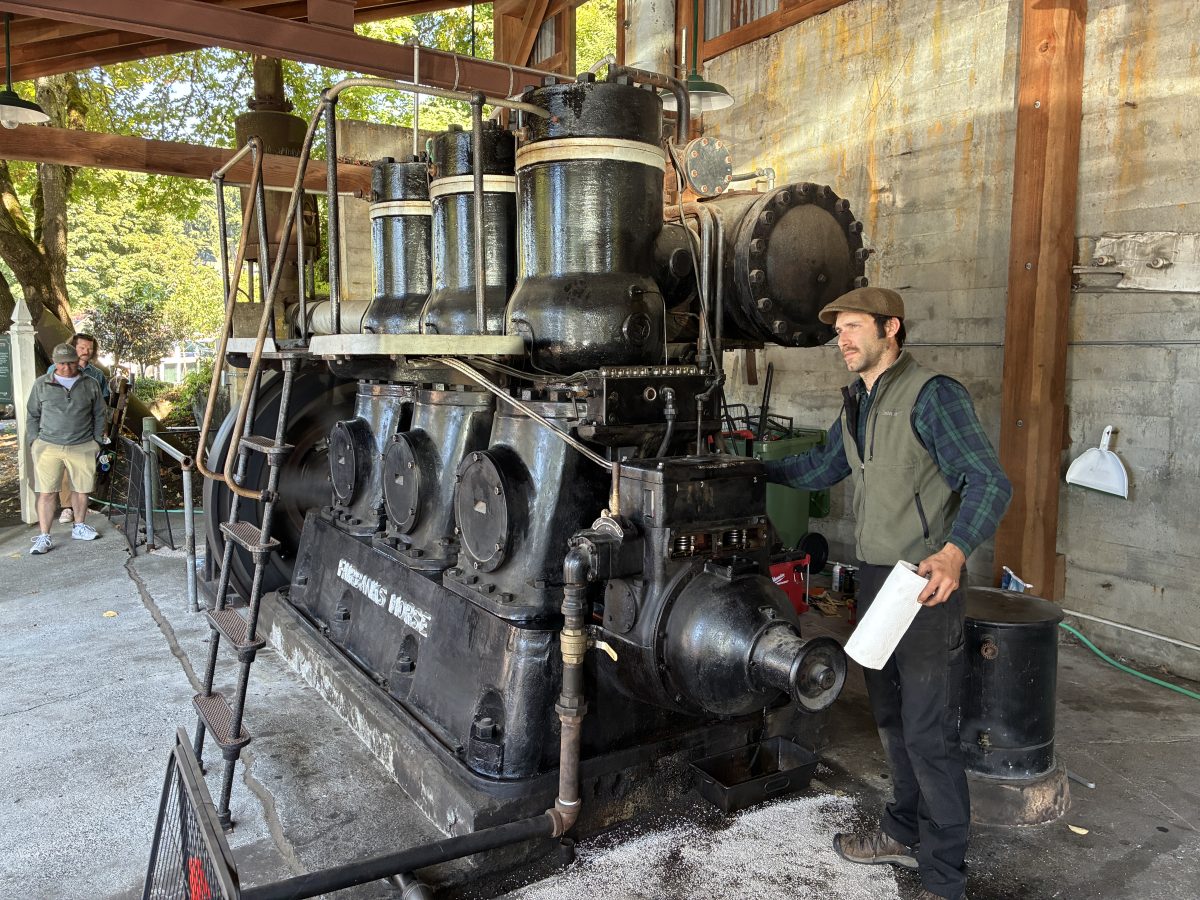 To do what? Watch Chief Engineer Luper and Adrian Lipp, two of perhaps a few dozen people left who know these big engines. Adrian spent 15 years digging this one out of overgrown blackberry bushes at the old Lime Kiln at Roche Harbor and got it running! Here is a short video. For more info about the lime industry visit this page. Also, Adrian has a wonderful website documenting all these old engines at Old Tacoma Marine.
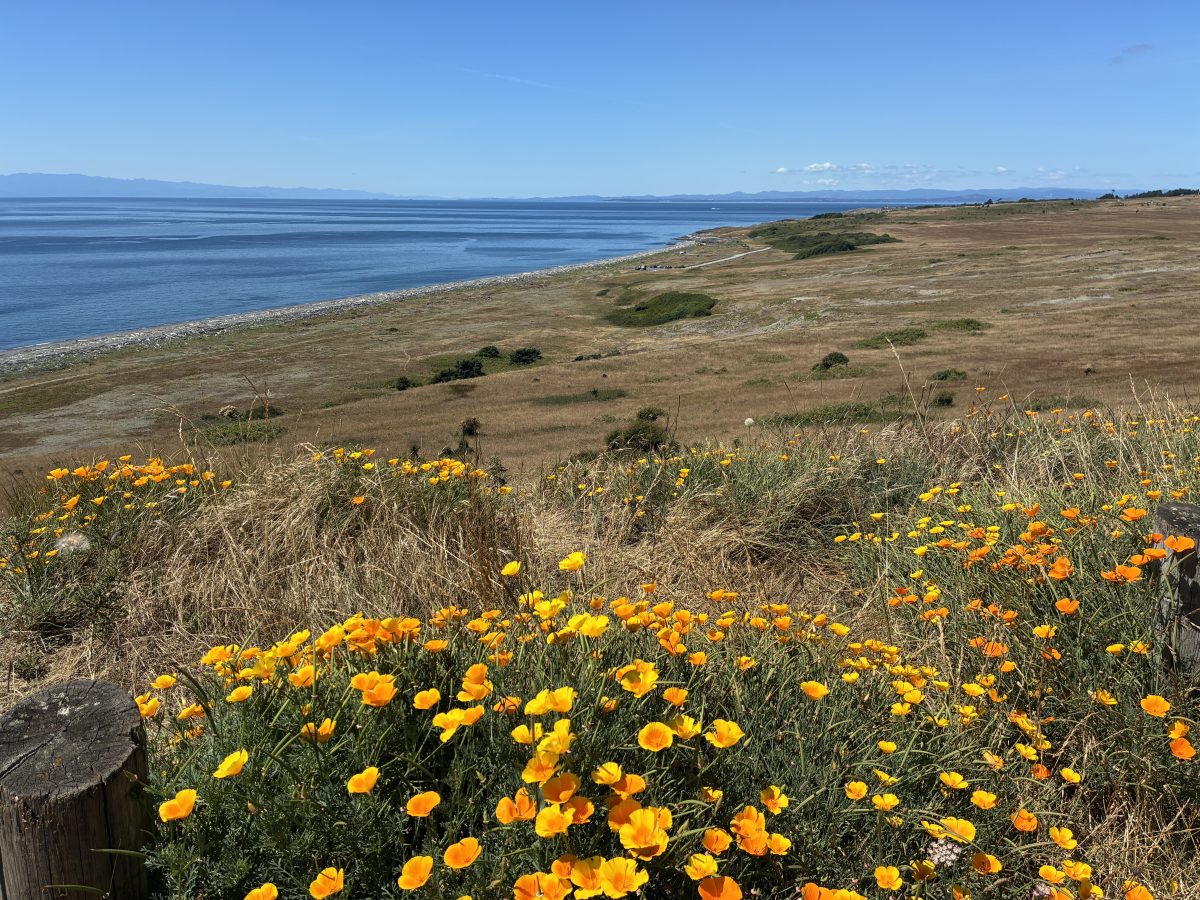 From Roche Harbor, I drive down the southern shore of San Juan through the NPS unit at American Camp. Judging from the rest of the island, I’m glad this was preserved or else all you would see is rooftops. I found most of the island shorelines studded with forced housing that should have never been built. At some point in the future, we need to address growth in these sensitive areas. Backing up almost 200 years, the American forces faced the English forces on this same island and in 1959 a British pig wandered into an American potato patch and became the first and only casualty of the Pig War. The Americans suffered on this windswept peninsula while the British…..
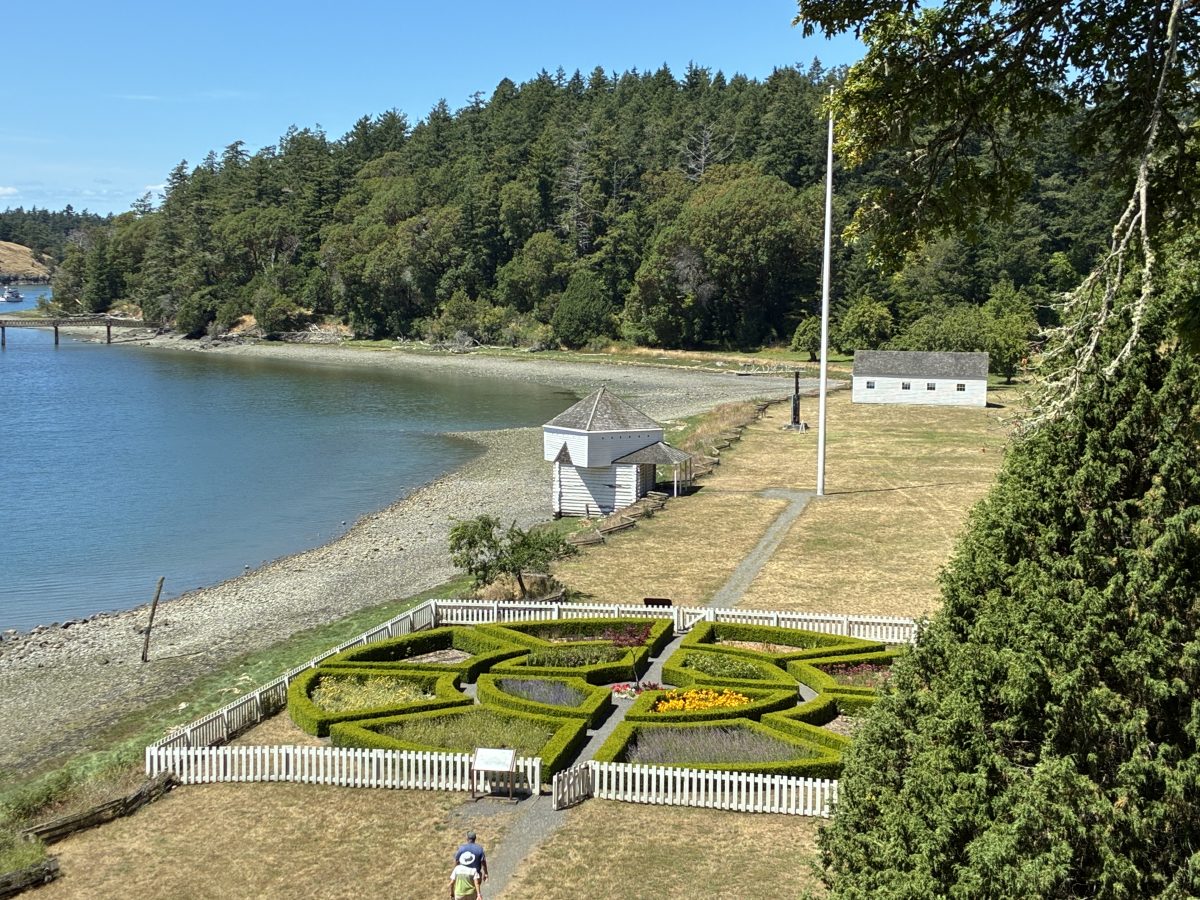 ….lavished in relative comfort up-island. The altercation about the pig escalated: The Americans warned to keep the British pigs out of American potato patches and the British retorted that it was up to the Americans to keep their potatoes out of British pigs! You can read the rest here on the Wiki site.
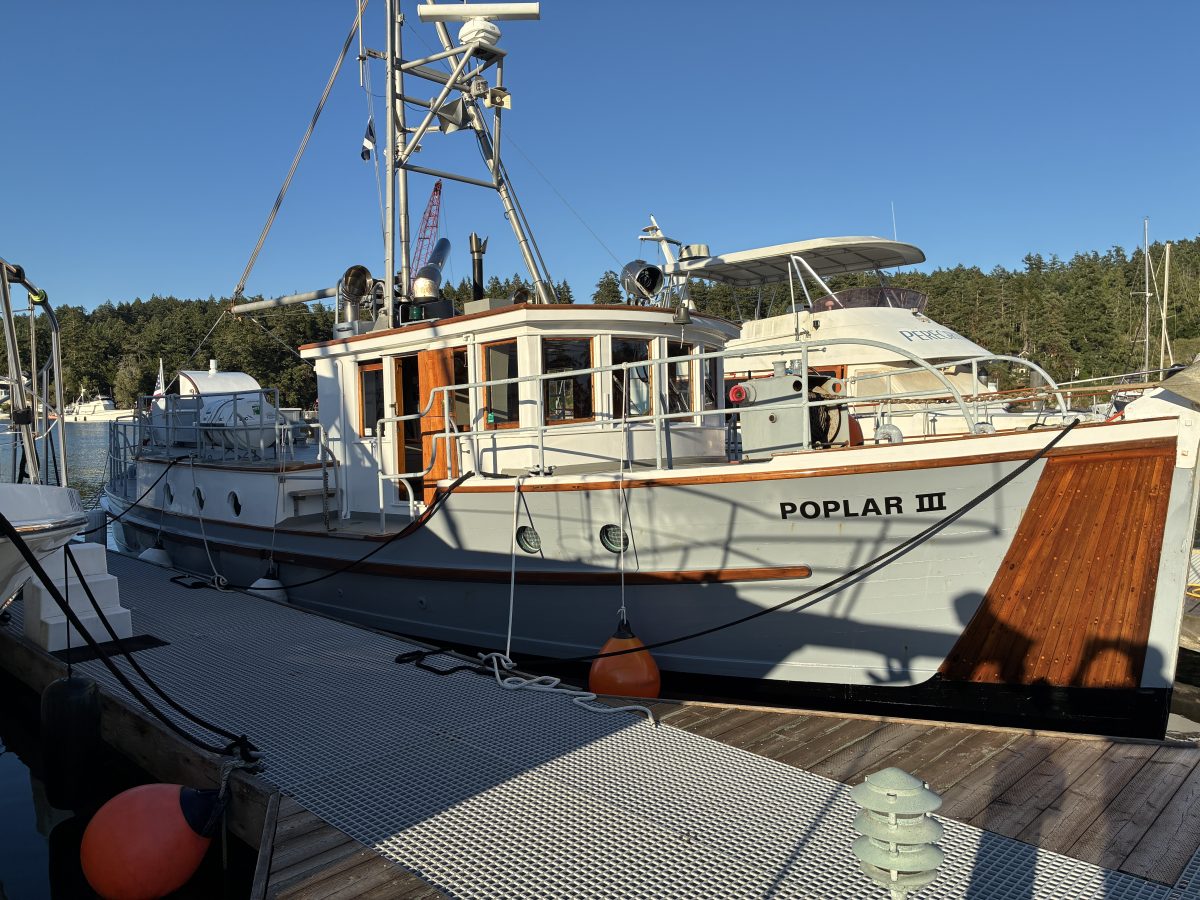 Meanwhile, I camped out on Poplar III, A Canadian Survey vessel built in 1948.
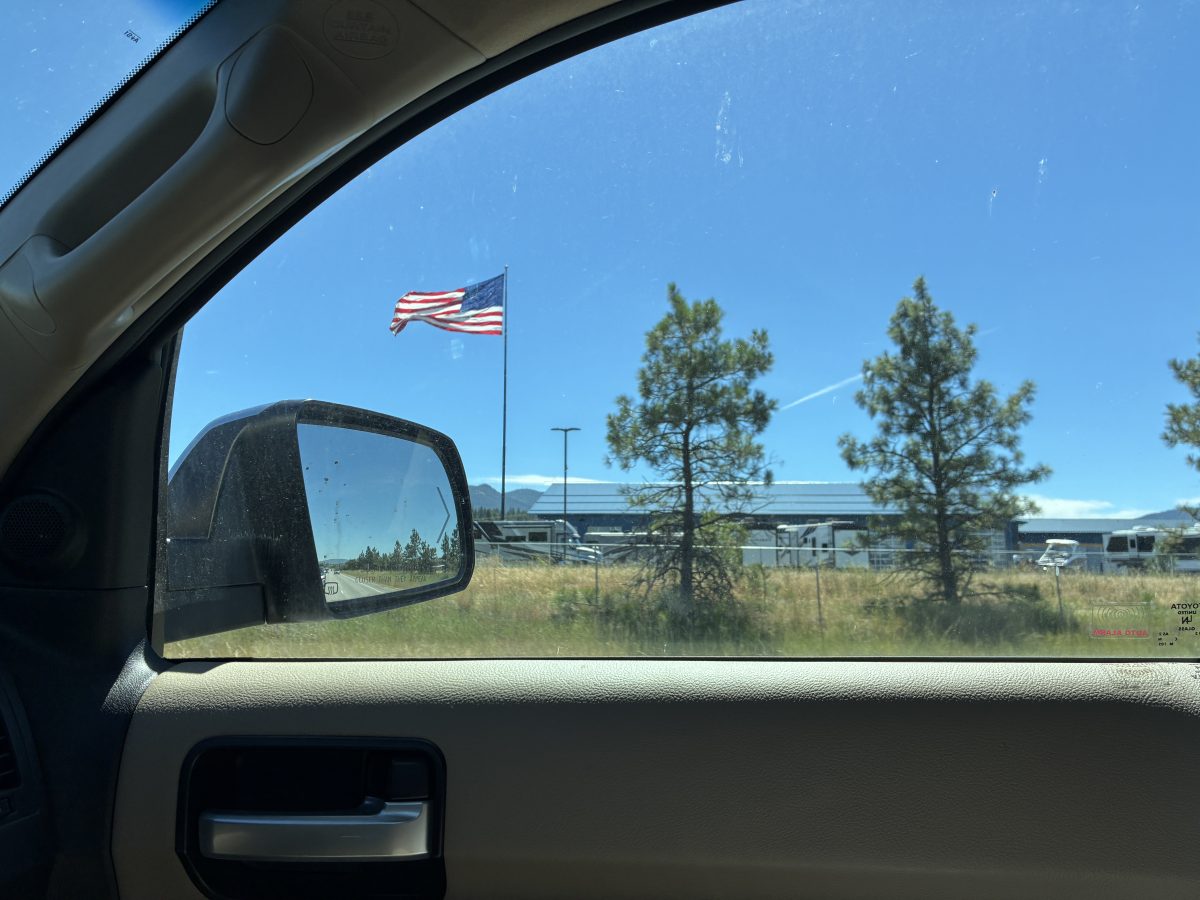 It’s time to hit the road for Jackson Hole, Wyoming–my old haunt. I still have access to my cabin there that I built with a chainsaw and a horse and a check to Laurance Rockefeller for $98.40. As I drive into Idaho across the border near Spokane, I notice the flags are bigger…..and also ubiquitous. OK, it’s the 4th of July.
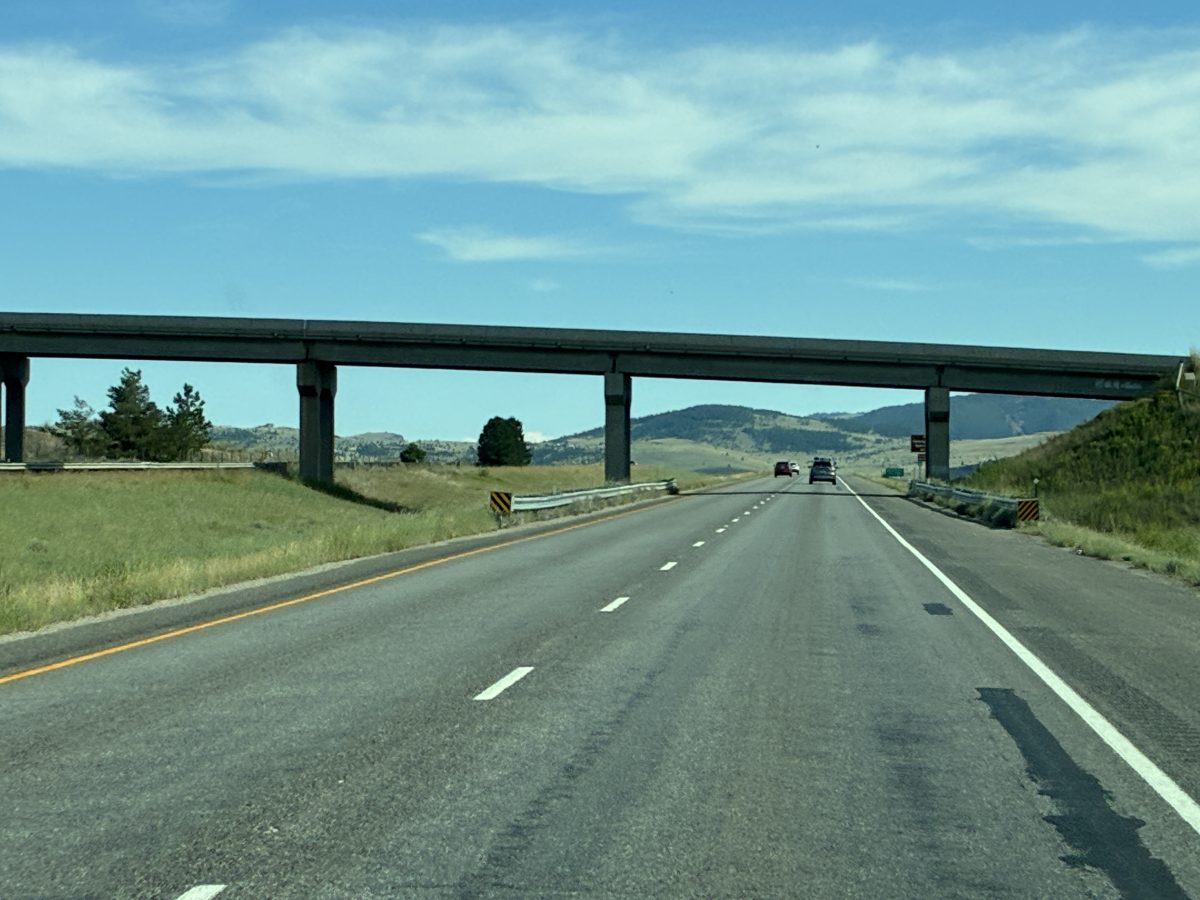 I drive under this familiar overpass. In 1967, Roger Johnson and I spent the better part of two days standing here at Brown’s Gulch, Montana hitch-hiking and not getting any rides. What we didn’t know, was we were just a few miles from the Montana State Prison. It was hot during the day and about 32F in the evenings. We nearly died. During the daylight hitching hours, one of us would hide to make the pick-up look more inviting, then the other would pop out from behind a sagebrush and usually the person would quickly drive off. We finally crammed ourselves in a small red Triumph, packs and all, much to the chagrin of the disbelieving yet generous driver. We had just spent a week climbing our first ascent of the Grand Teton–the Complete Exum Ridge–a trip begun with legendary climber Fred Beckey a week before in the largely unclimbed Bighorn’s of Wyoming. We were mere lads at the beginning of this road-trip and mountain men when we returned!
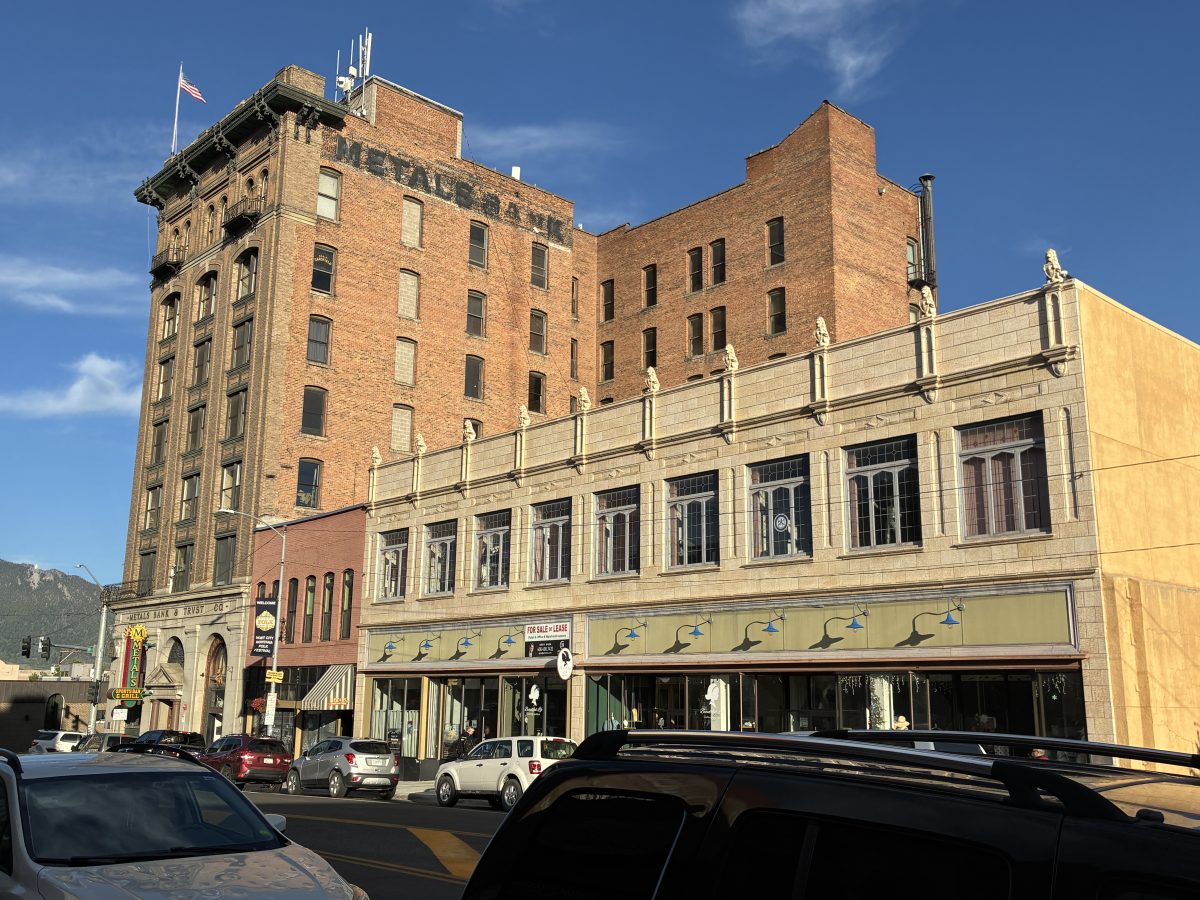 After driving this route for 60 years now, I’ve passed the city of Butte Montana hundreds of times and decided to make my first visit breaking up my drive into two days. I found Butte delightful. I stayed at the Miner’s Hotel (this building is across the street but similar). I stayed in the Orphan Girl room–each room was named after a mineshaft. The Orphan Girl Mineshaft was 3200′ deep but was air-conditioned even though it was a lower producing mineshaft. How these miners worked!
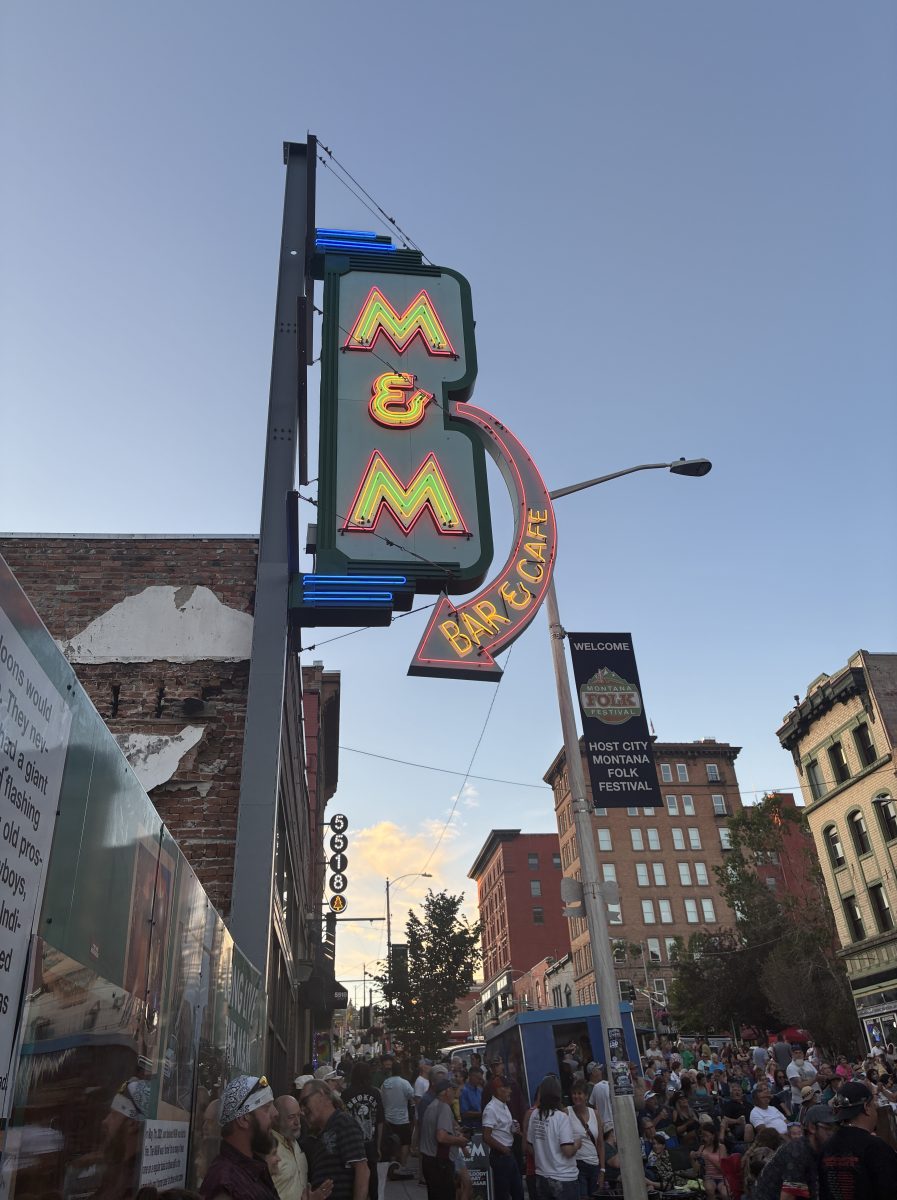 Right around the corner was the M&M Bar & Cafe and I was not disappointed with my steak dinner–only $23.00; their Thursday night special! Service was fantastic. I sat next to a Bavarian, on barstools, who ran a business there and explained the politics of the town–Blue! Who would have guessed. I went back for breakfast, and the same petite waitress served me again, and couldn’t finish my plate! Both my waitress and the cooks each got a $20 tip! And I’ll return.
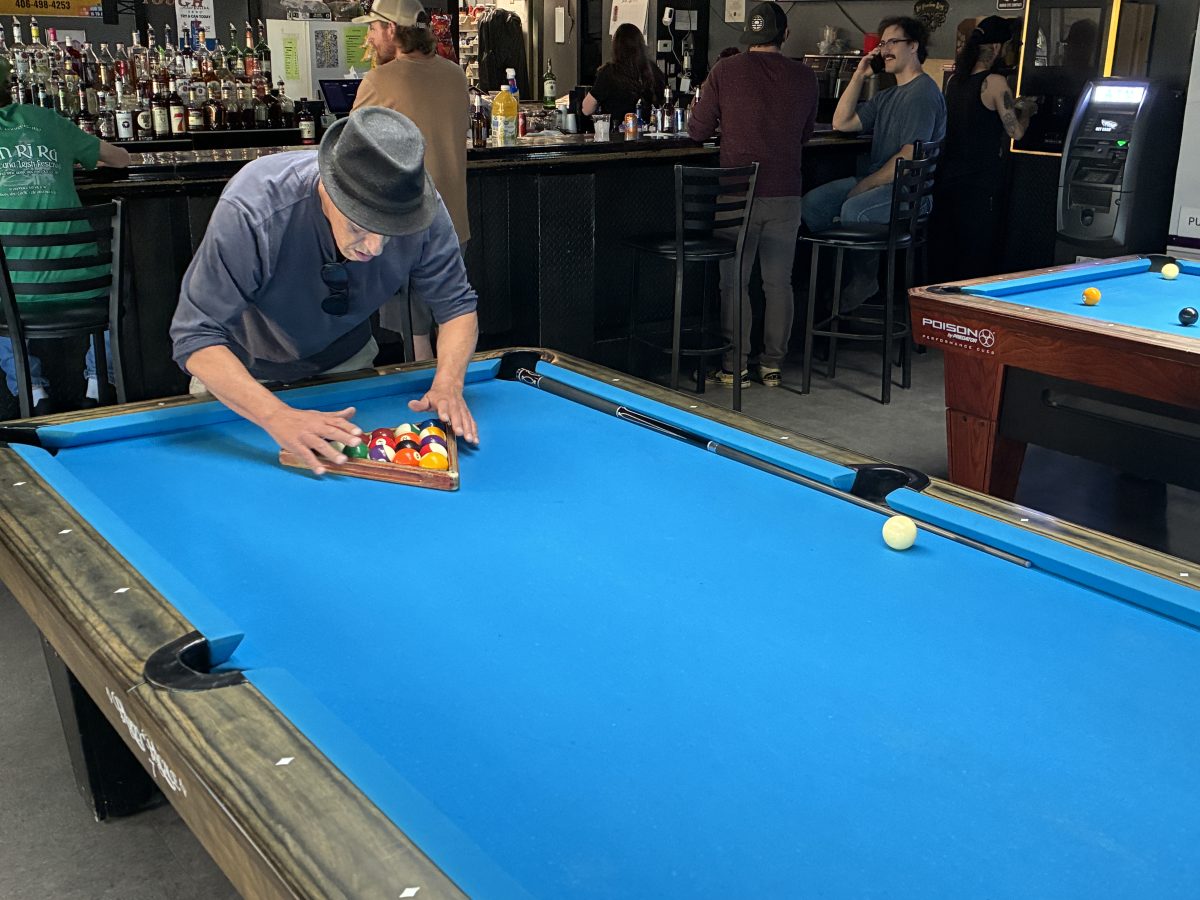 Did I say Butte was a blue city?
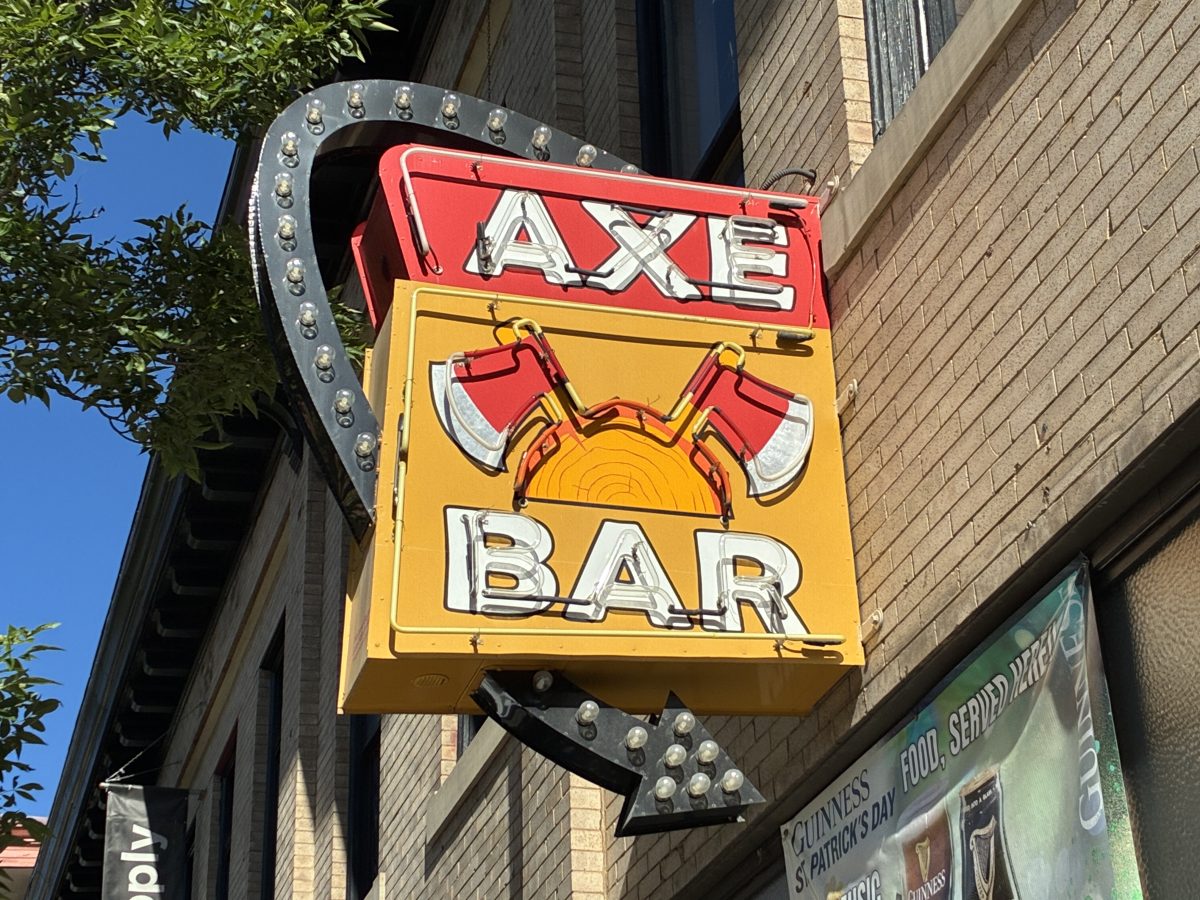 The Axe Bar–neon is still alive in Butte….. There are dozens of these old pubs in the old town.
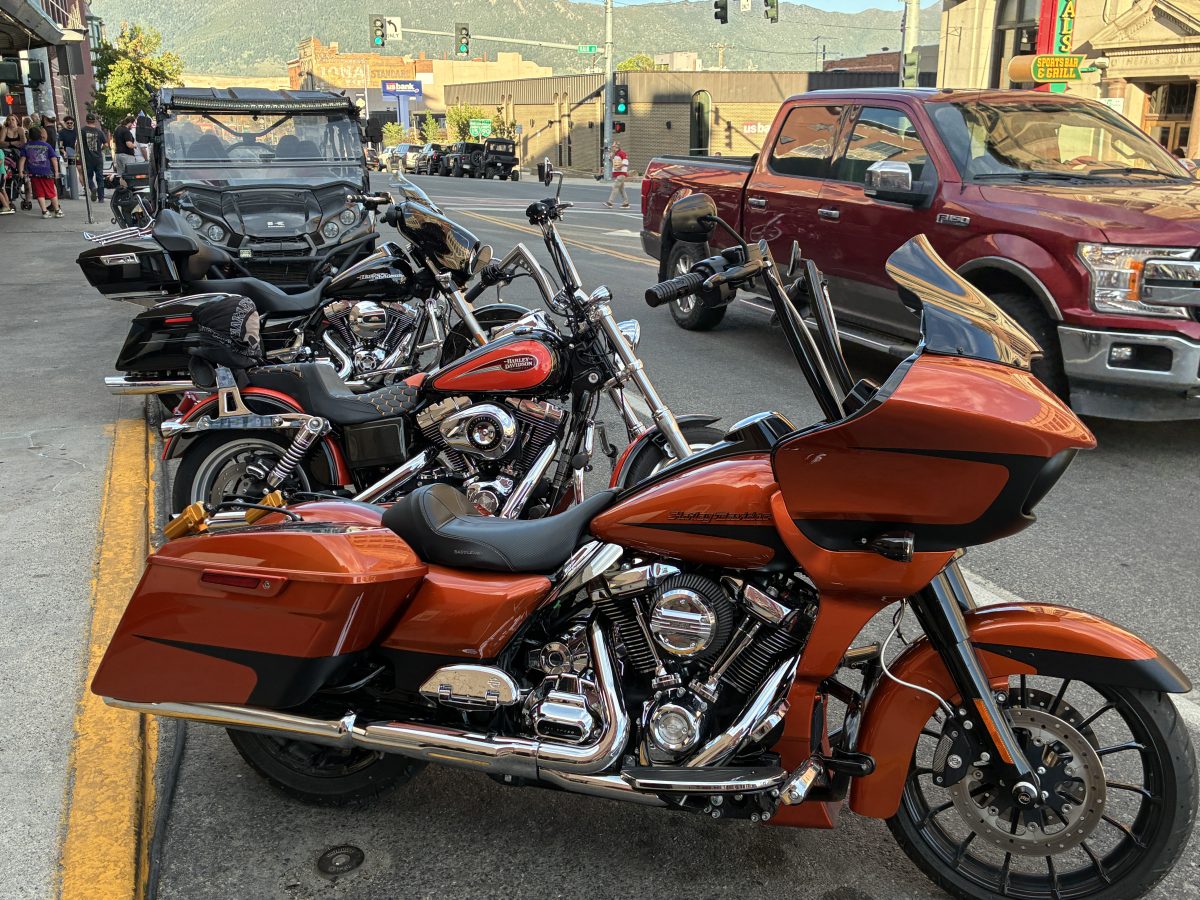 Big music festivities right outside the M&M–walked around a bit to work off my dinner.
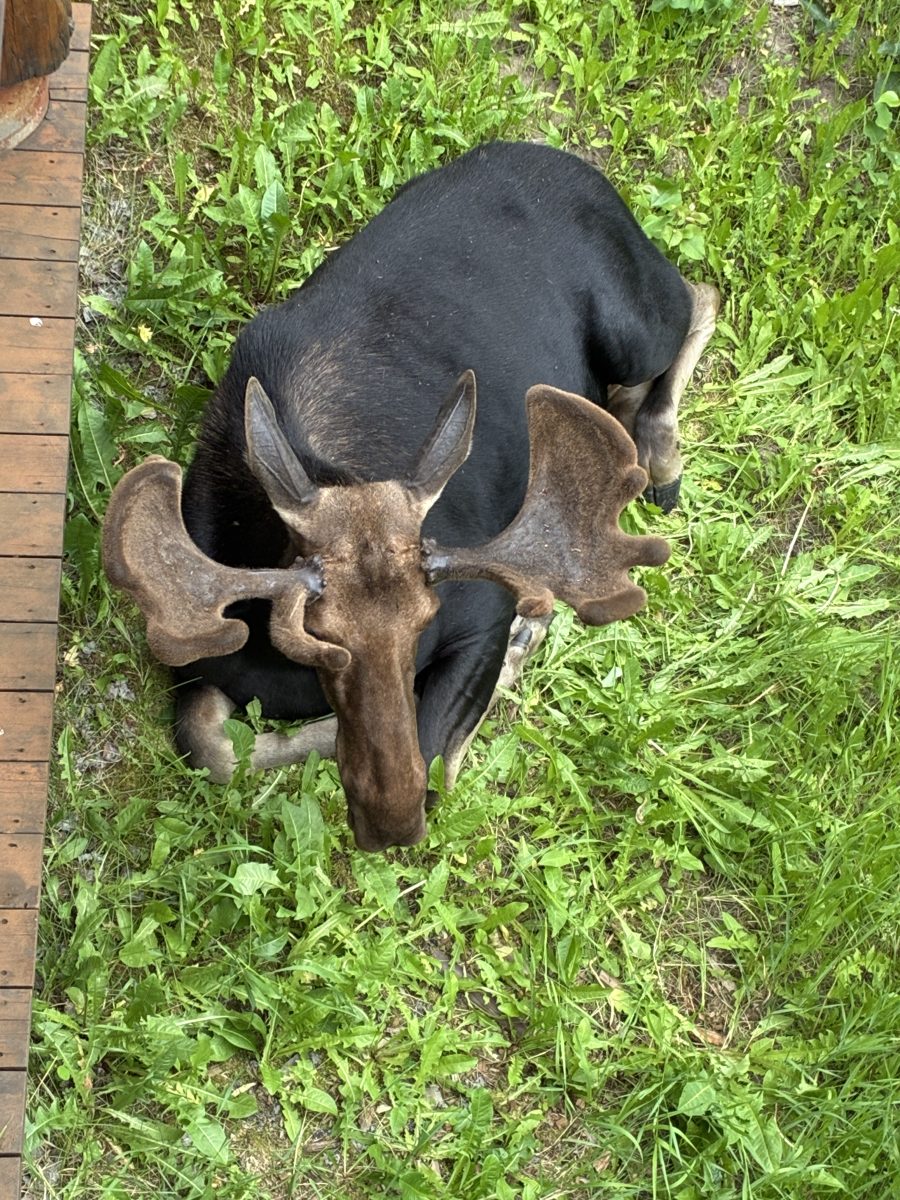 At last, back in Moose, Wyoming……stay tuned!