

This is a view of South Lake Union Park created in the first decade of this millennium opening in 2010. The Navy owned the land and the old Armory building was built by the WPA and today houses the MOHAI collection (Museum of History and Industry). There are 6 slips for historic vessels. Part of this park is the Center for Wooden Boats–a collection of about 150 small wooden boats. In the 1990s when I served on the Virginia V Board of Directors, there was a movement afloat (pardon the pun) to create an umbrella organization encompassing what is left of Seattle’s historic fleet–the Maritime Heritage Foundation–which floundered and failed. It was to comprise the Virginia V (the last wooden passenger steamship in the US; the NW Seaport’s (formerly Save or Ships or “SOS”) fleet of five vessels: the Arthur Foss (1889); Wawona (it sunk), the lightship Swiftsure, fireboat Duwamish, and halibut schooner Tordenskjold; the CWB, a Native canoe group; and I recall select members of the Classic Yacht Association. Above is a photo I took about a year ago from the footbridge across the lagoon–one can see the Virginia V, Arthur and Swiftsure; and below is the Lake Union Park from two overhead perspectives–compliments of Google Earth:


My proposal is to revitalize this Heritage Project but the supervisory body would be the National Park Service and it would be modeled after the San Francisco Maritime National Historic Park. Below is a photo taken last year and is what San Francisco has done with their collection. The three masted lumber schooner–C. A. Thayer–is perfectly restored and is the sister ship to the Wawona–sunk at South Lake Union through neglect. It’s time to buckle down, raise some money and save the Arthur, before she too sinks.

Here’s some of the advantages to my idea:
- The structure of this park would be modeled after the San Francisco Maritime National Historical Park –misery loves company, right?
- The centerpiece would be a fully restored Arthur Foss–the last surviving vessel to participate in the Klondike Gold Rush of 1898. The Arthur was also the last ship to escape from Wake Island when Pearl Harbor was bombed, beginning America’s involvement in WWII. The Arthur was also the movie set for “Tugboat Annie.”
- Klondike Gold Rush–Seattle Unit–National Historic Park and the Alaska counterpart in Skagway would be the administrative hosts.
- Arthur Foss would be declared a National Monument (it’s currently on the National Historic Register) using the 1906 Antiquities Act qualifying her for emergency funds.
- The Armory building (MOHAI) would host offices to manage this fleet and interpret the vessels.
- The current Klondike headquarters in Pioneer Square is less accessible and has had a recent lease issue–MOHAI would be the perfect new home. Besides having a maritime office/interpretive center here; Klondike would still maintain the Pioneer Square location.

When I joined the Navy in 1963–as a 17 year old, I marched in this building. It was a Naval Station then.

A better look at the steamship Virginia V, Arthur and Swiftsure. Arthur runs a Washington 600 hp slow turning direct reverse engine (although it boasts a sailing clutch today). Katahdin also has a Washington Ironworks engine (6-R-13). There are about 8 of these engines left–I’ve parts for 1000 years of rebuilds. :


One of my original ideas was to cut the house off the Kalakala and drag it onto this site and use it as a museum building–nope–no one listened to that idea–and another Seattle icon was lost–cut up for scrap. Folks….we’re sinking our history here. It’s time to muscle up some money and save what’s left.
Some additional considerations:
- Acquiring or leasing the FVO (Fishing Vessel Owner’s) marine haul-out facility to actively demonstrate how vessels are maintained. A small shipwright shop, two piers and two lifts are sitting idle currently. This would become a working museum similar to the SF or Mystic Seaport museums.
- Foss closed their shipyard located on the south shore of the ship canal facing Ballard. The city of Seattle requires any developers to maintain a maritime presence there. What would be better than the two oldest tugboats left in the United States; both Foss boats at one time, and in running condition, being permanently moored there and open to the public.
- I would donate the Katahdin, an 1899 built tug to be moored at this location on permanent display. Here is Katahdin moored at Foss:

Use the search symbol or the Katahdin link at the top of this post for the 125 year history of Katahdin–now the oldest running tugboat in the United States. When the Arthur gets running again, I’ll be the second oldest. I’m now the longest owner of Katahdin at 31 years. I’ve restored her twice, lately with Port Orford cedar. I have “invested” over $1M during these 30 years, and lived on her for about 10 years in Alaska working small villages as a dentist. She’s had eight owners. Here’s Arthur and Katahdin in Port Townsend about 1998 and another with the Elaine in 1952 on the Seattle waterfront:


And being built on the Duwamish waterway in 1899.

Katahdin was built in 1899 on the Duwamish waterway. Here Martin Hansen (right) stands with two shipwright: Heckman and H. Henneger. She had reverse bulwarks and a lot of “tumblehome–inward curvature of the bulwarks or side rails and some in the bow-stem. I’ve identified only three butt seams–most of these planks run the entire length from stem to stern–about 80′. The Department of Natural Resources in Washington needs to set aside lumber for such restorations. We also need to keep ship carpenters–shipwrights–trained. The Sabino, Mystic Seaport’s only steam passenger launch just lost their last steam engineer and now runs on propane. Virginia V assures me that they are training new engineers.
All historic vessels could be rotated from South Lake Union to the Foss mooring facility, the FVO repair marine lift, and have access to both Lake Union and Lake Washington to be seen by the public but also Puget Sound salt water environments–good for wooden boats.

Here is the FVO marine lift–Ballard Bridge view:

And from the east pier–two marine lifts–large & small:

A machine shop–stripped of copper by druggies. All the initial restoration of Katahdin was accomplished in this building in 1996-7.

Move over Mystic Seaport. Katahdin first hauled out here in 1994:


This was a daunting task. My reasoning is that if I sell this to a private party, she will eventually sink. These are the last of our historic fleet.

This is a sketch by Nita Foraker done sometime in the 1980 of the 6 remaining historic tugs owned by Foss–at least two of these are now gone. Katahdin is far left. Next is Wallace which was driven to the East Coast via the Panama Canal! She languishes there–they owner died of a heart attack after arriving. Lorna (stern out) sank in Canada about 5 years ago–along with her Atlas engine–sad. Parthia outboard I’ve lost track of. Background–the Joe: Joe’s house burned off 10 years ago and has been rebuilt. Henrietta is owned by Foss still and was just completely rebuilt in Port Townsend:

That’s my idea. I’ve visited Senator Lisa Murkowski, Patty Murray’s staff (still waiting Patty), Superintendents of Klondike, SF Maritime, former W. Regional Director Mike Reynolds, NPS Director Sams and Secretary of the Interior Haaland. Of course, the political landscape changes so it’s time to lay the groundwork now–get our ducks in a row (haw, haw, chuckle). Mike told me “get me the money and I’ll get you the park.” Let’s do it!
This NPS Klondike National Park Maritime Museum could be Seattle’s next Pike Place Market.
PS: I’ve also talked to Teddy Roosevelt:

Stay tuned and roll up your sleeves!
Below is an earlier draft on this idea–with more background on the Arthur–pardon the redundancies and contradictions:
Here is a daring and bold proposal. I propose putting the historic tug Arthur Foss under the stewardship of the National Park Service. It would join an existing NPS Unit (Klondike Gold Rush–Seattle Unit) and be modeled after the San Francisco Maritime Historical Park. Seattle deserves it. It would undergo a $10M (estimated) restoration in Port Townsend over a 3-5 year period restoring her hull and putting her in seaworthy condition. Funding would come from an appropriation via the NPS matching any dollars that can be raised with the State of Washington. Her home port would be MOHAI–the Museum of History and Industry where currently there are moored several historic ships (she is currently located there).
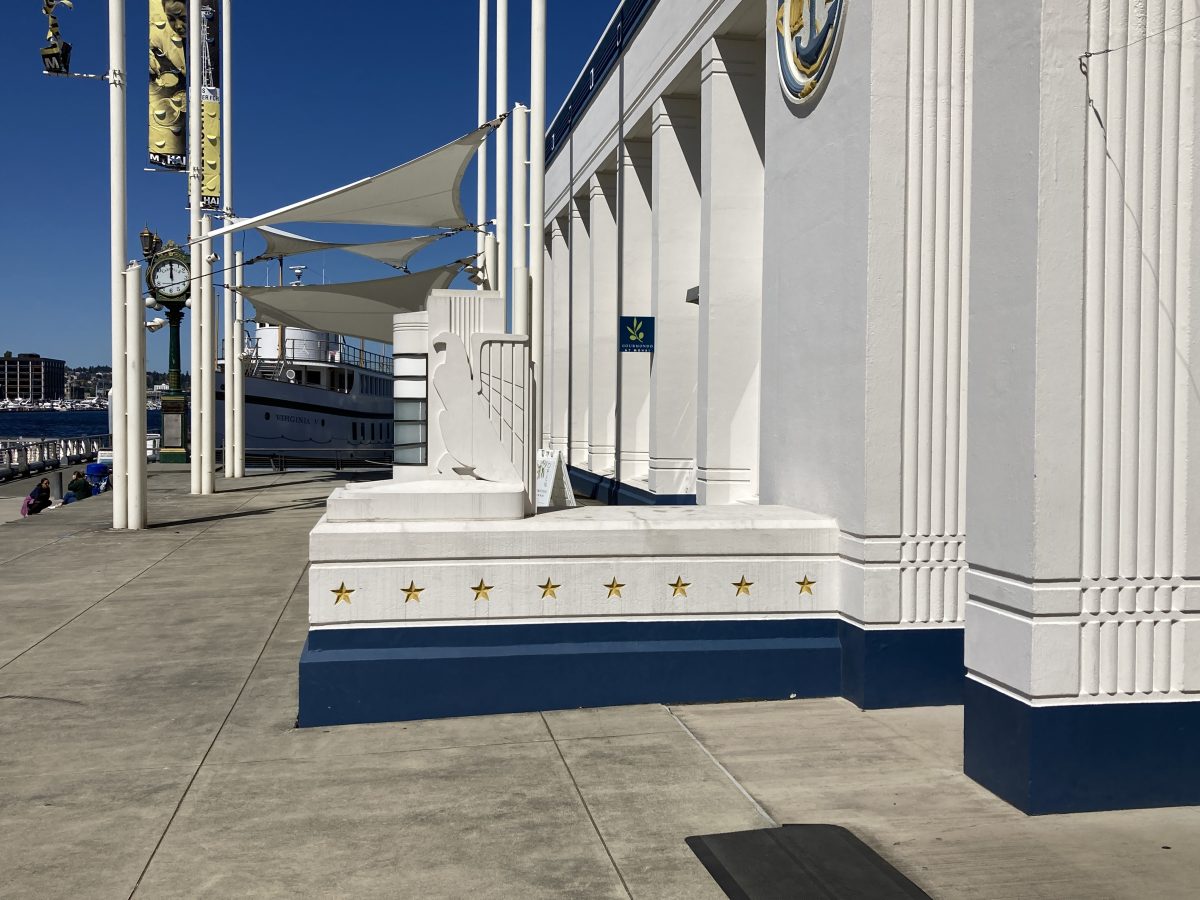
This is the MOHAI facility, originally Naval Armory. When I joined the Navy back in 1963, I trained in this building. There was a submarine out front and also a Destroyer Escort which I rode up to Victoria, Bellingham and back to Seattle in the Thanksgiving Day storm. It was quite a ride. But I digress…….. Today, this is a museum adjacent to the Center for Wooden Boats on the south end of Lake Union. Here is the Center:
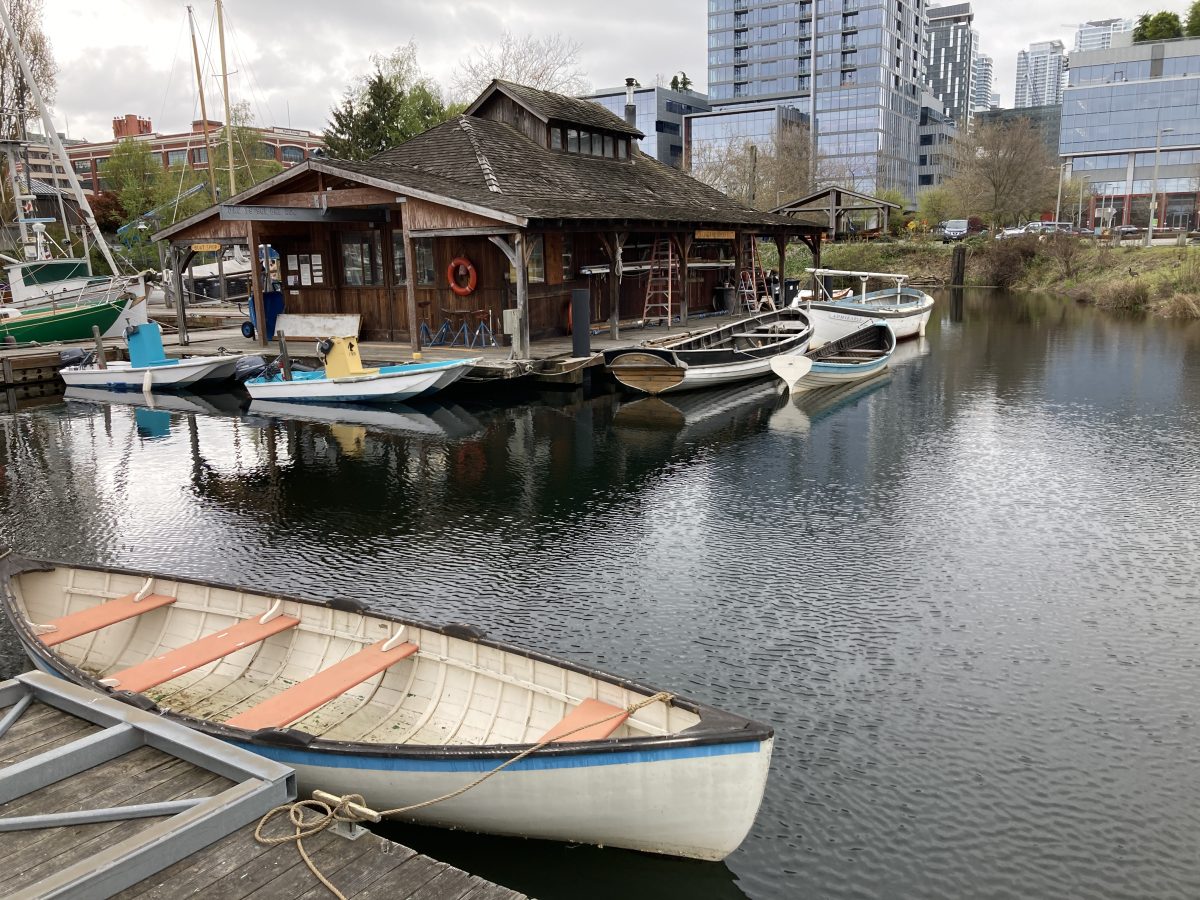
This “Popeye Village” as I like to think of it, is unique–there is nothing like it except perhaps Mystic Seaport in Connecticut. The Center for Wooden Boats was the brainchild of Dick and Colleen Wagner. Dick was the “Victor Steinbrueck” of the maritime world. (Both Victor and Dick were architects–Victor led the drive to save the Pike Place Market, where I practiced dentistry for 20 years). Seattle was lucky to have people with vision like this (and lucky to have me as a dentist in the Market). The CWB is expanding into the old Foss Shipyard and increasing their collection to larger vessels. I may donate Katahdin to this fleet–putting it into a Non-Profit status.
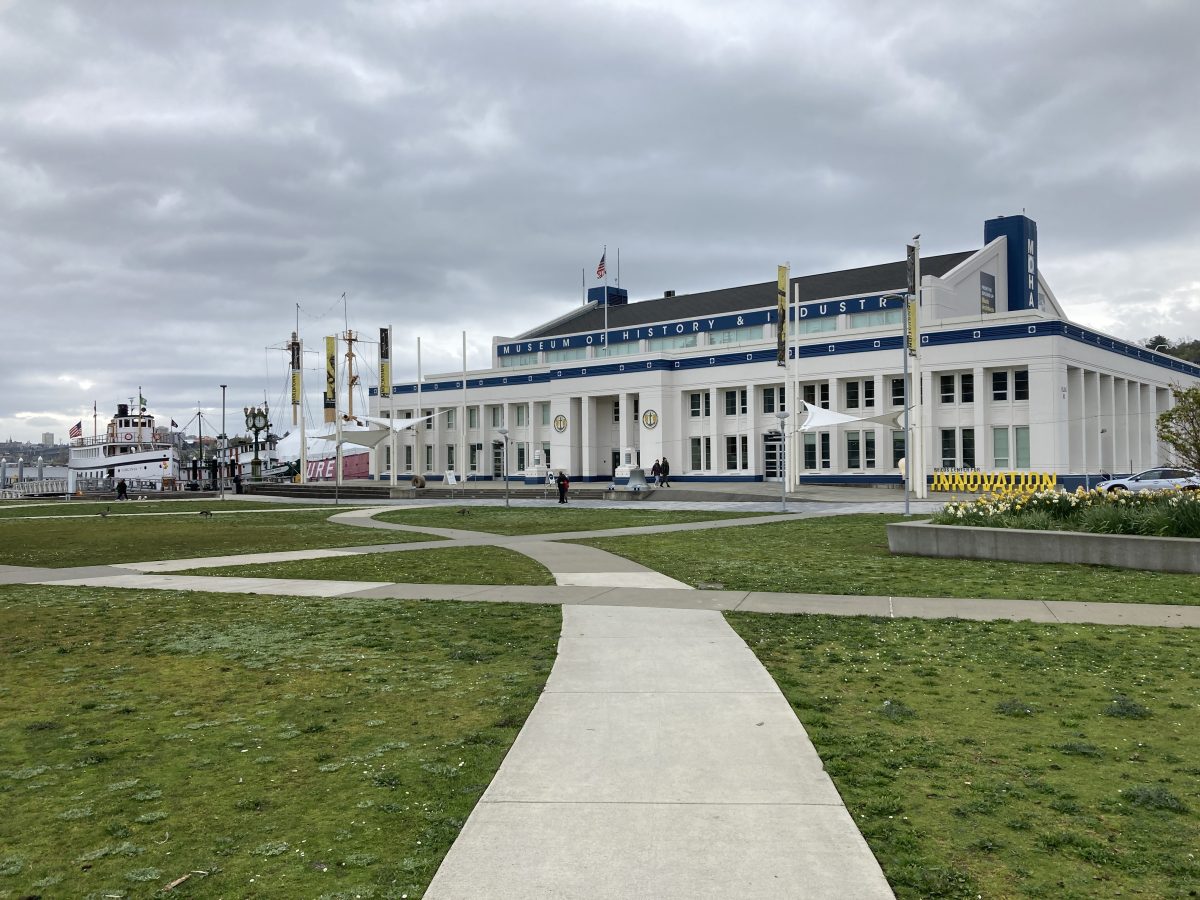
Here is the big picture–the moorages are on the left of this photo. The Virginia V is fully restored, has an active board, and is available for charter. It also participates in many maritime ceremonies around Puget Sound…..or is it now the Salish Sea? The “V-5” is the last wooden steam passenger vessel in the United States and was once one of a thousand such vessels that plied the Sound–called the “Mosquito Fleet.” I sat on the Board of Directors for about 6 or 7 years in the 1990’s. The V-5 also sports a 1904 Heffernan triple-expansion steam engine–a sight to behold. It’s five chambered steam whistle is an audio-hallmark (blow the steam whistle here) of Seattle when released. Let’s take a quick look at Arthur:
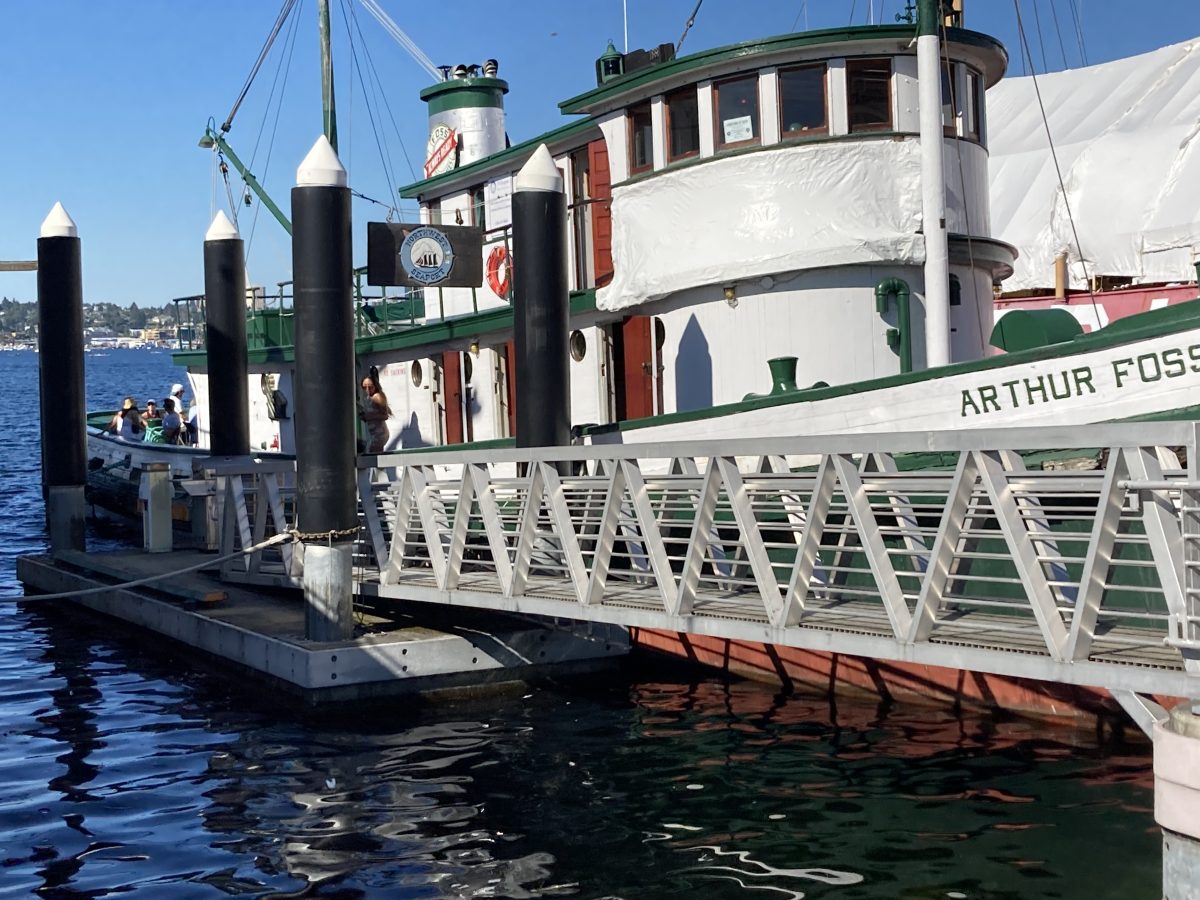
If you’ve made it this far–you must be a serious mariner. Consider that the Arthur Foss is:
1. The oldest tug in the United States–built in 1889;
2. Participated in the Klondike Gold Rush;
3. Was the movie set for Tugboat Annie staring Marie Dressler and Wallace Beery;
3. Participated in WWII–and was the last vessel to depart Wake Island when the Japanese invaded, limped into Pearl Harbor hours after the attack.
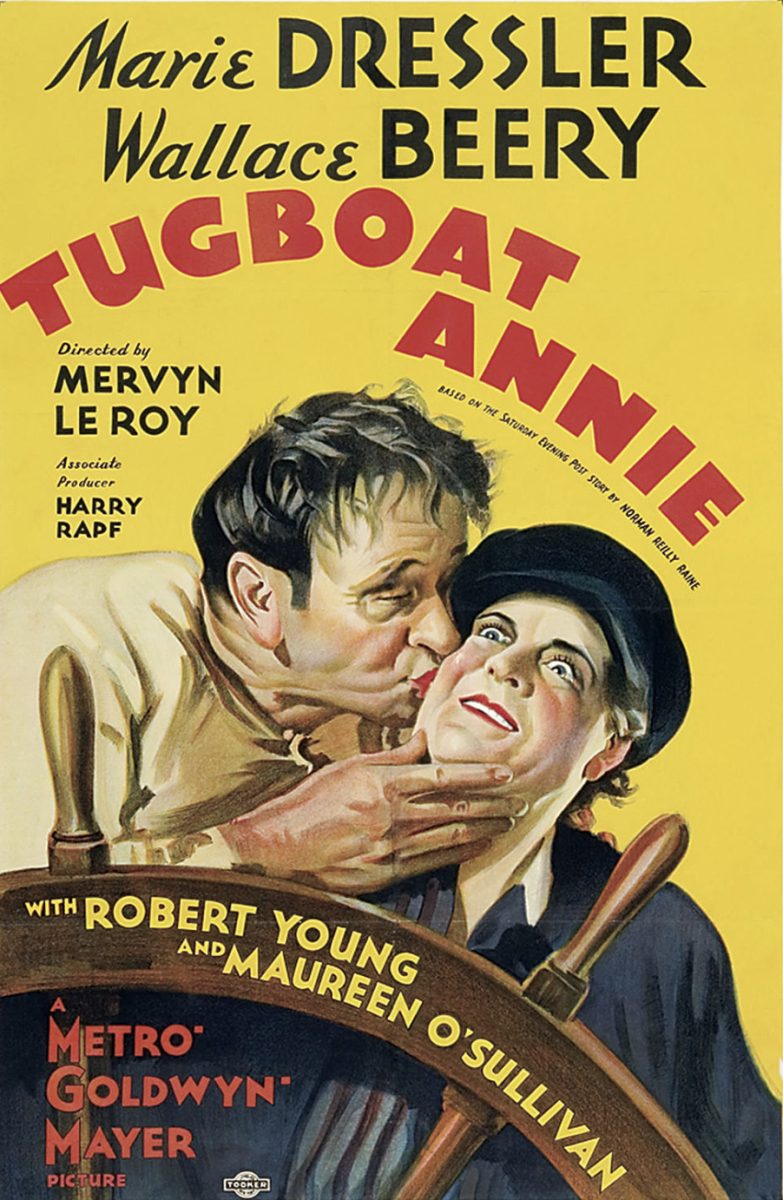
Yes, this very boat. But, the WWII history is far more noteworthy and that’s why the National Park Service should take this under her wing. If not, she will sink.
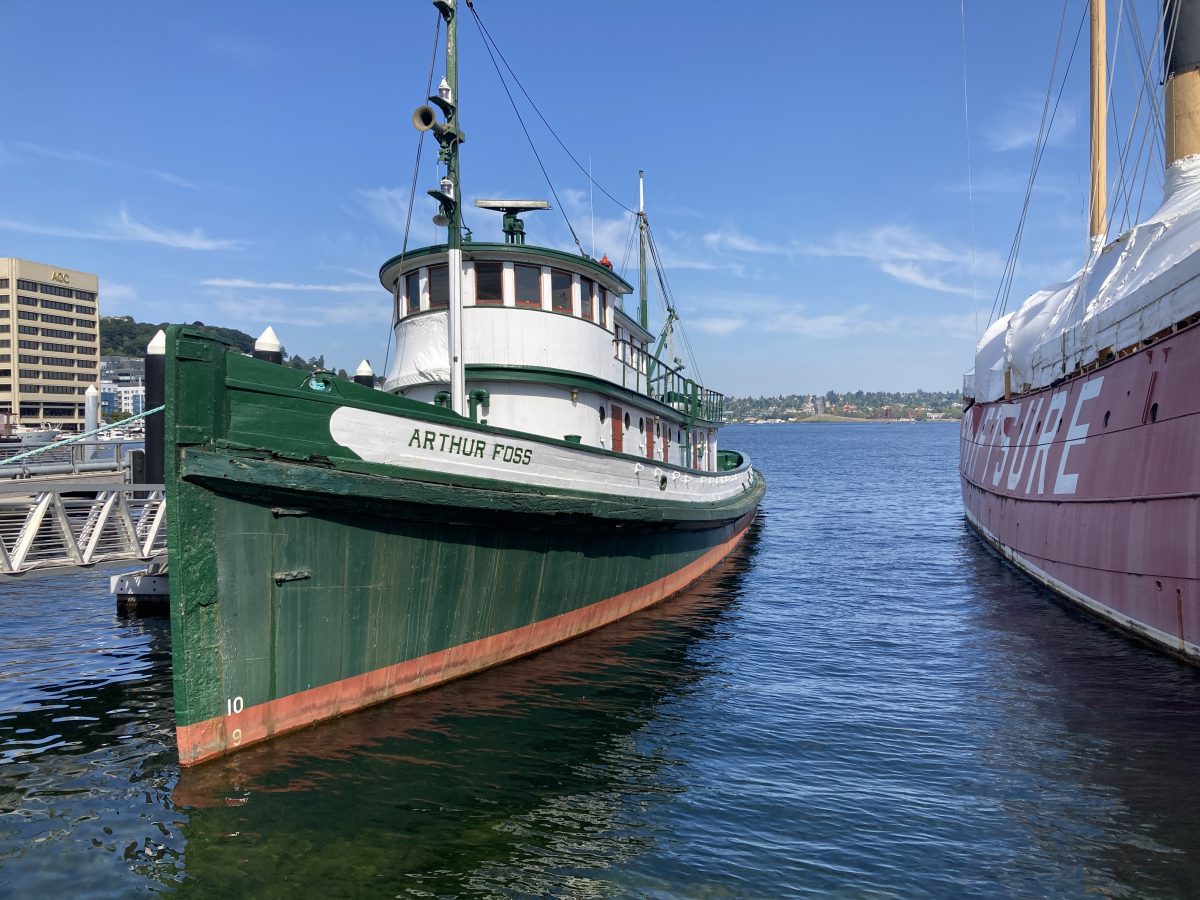
At first glance, she appears pretty smart–but the hull was recent plywooded to prevent her fair-weather seams from drying out and sinking the boat–a stop-gap effort. Not surprisingly, the interior is quite intact the the machinery is functional–a 600 hp Washington direct reverse diesel engine. Maximum rpm is about 200.
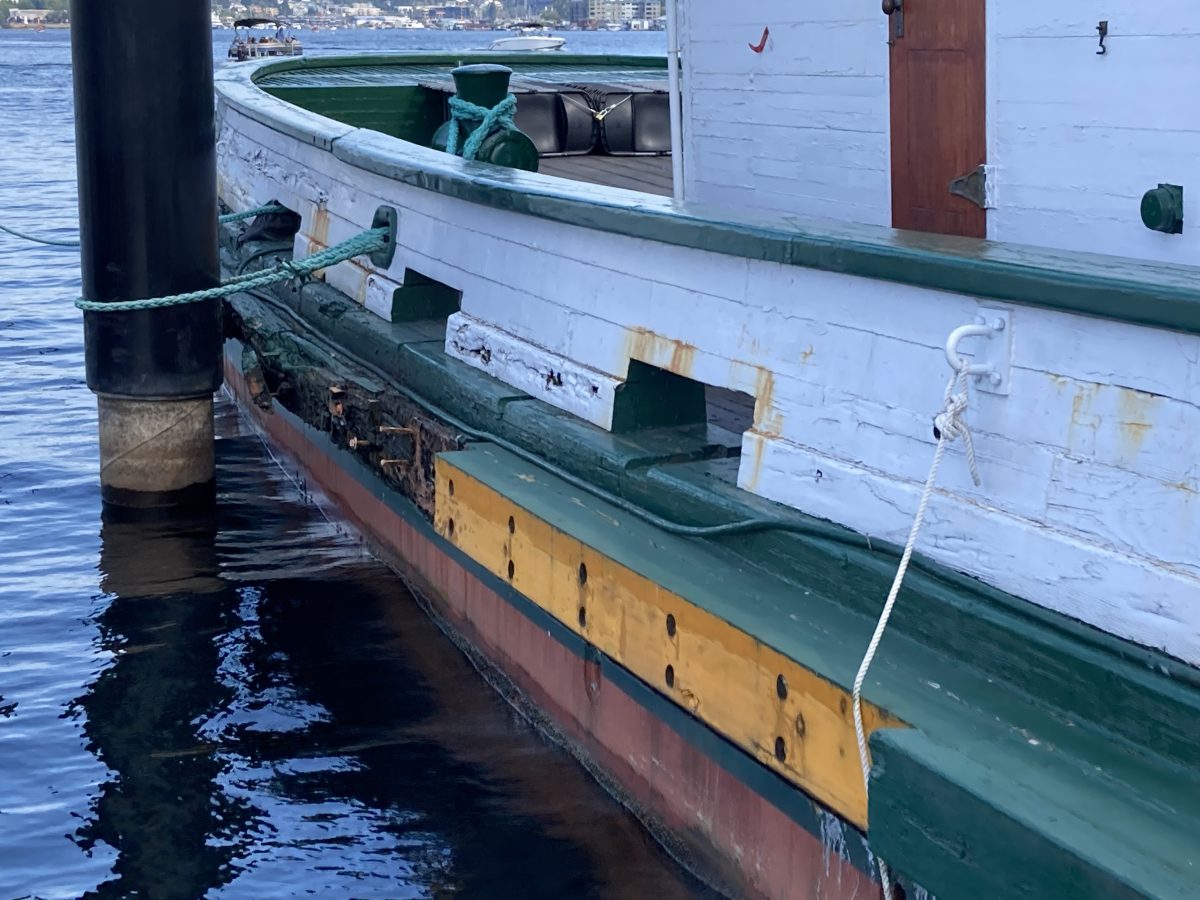
Some work is progressing on the bulwarks–this missing piece is called a “guard” the “sponson” is now showing it’s natural wood color. Most of the hull from the waterline up, will need to be replaced in this restoration I’m proposing.
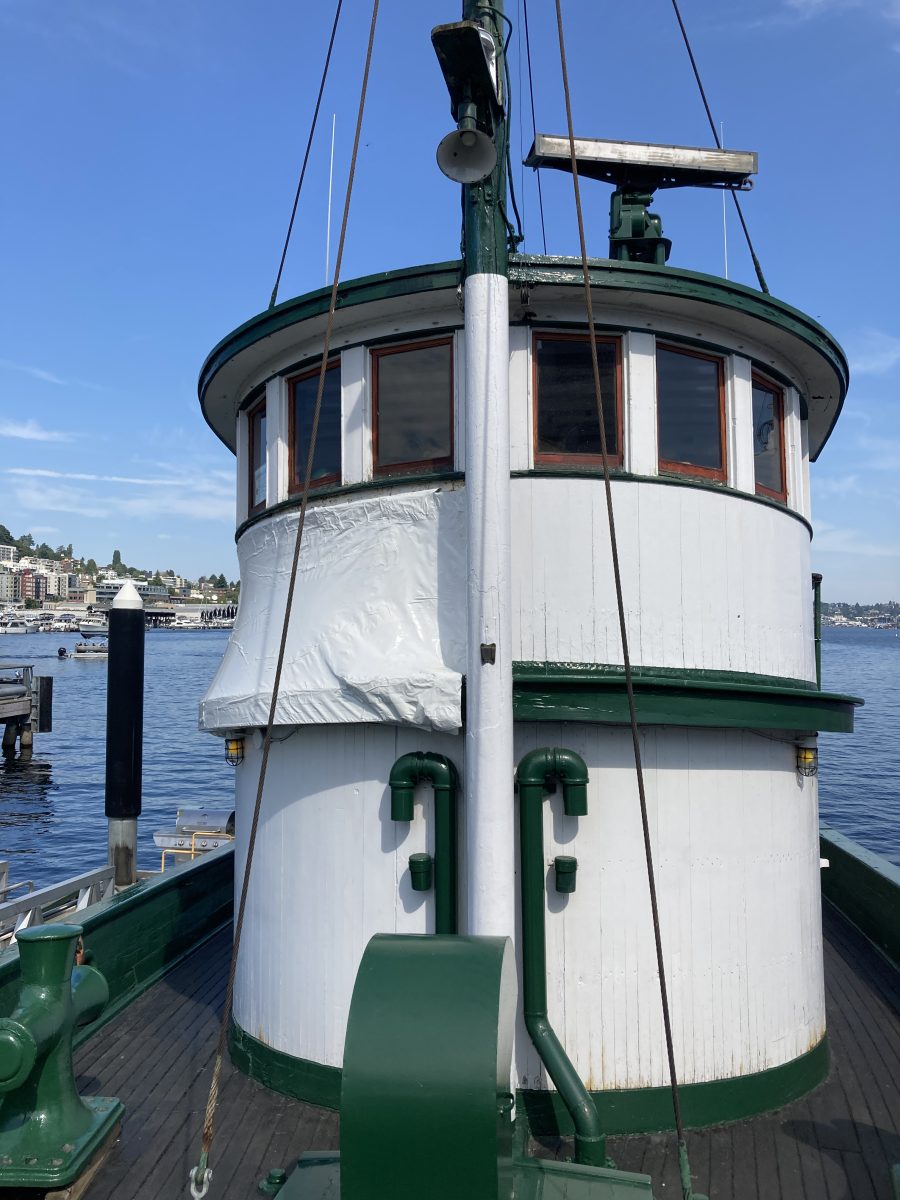
Majestic! Let donate money and get this project moving folks.
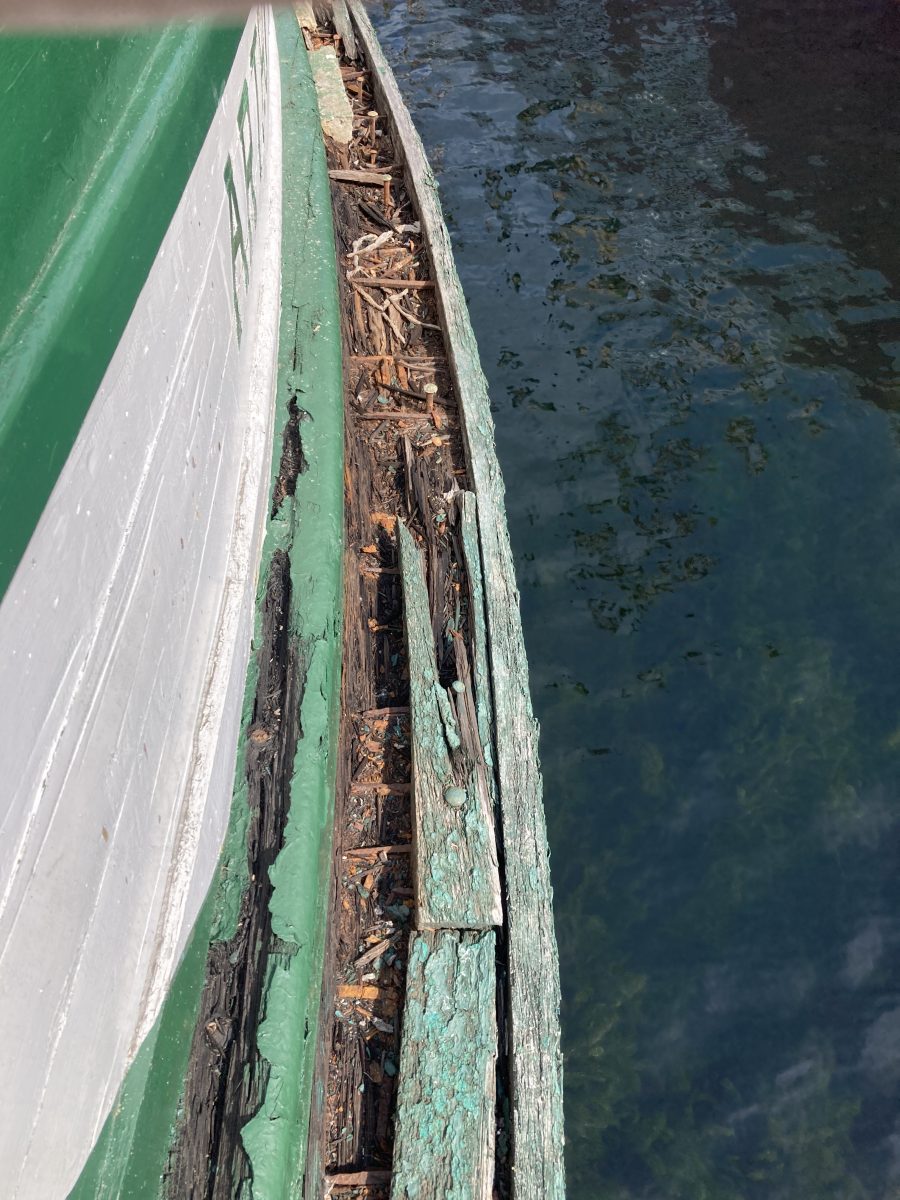
This is the opposite sponson & guard.
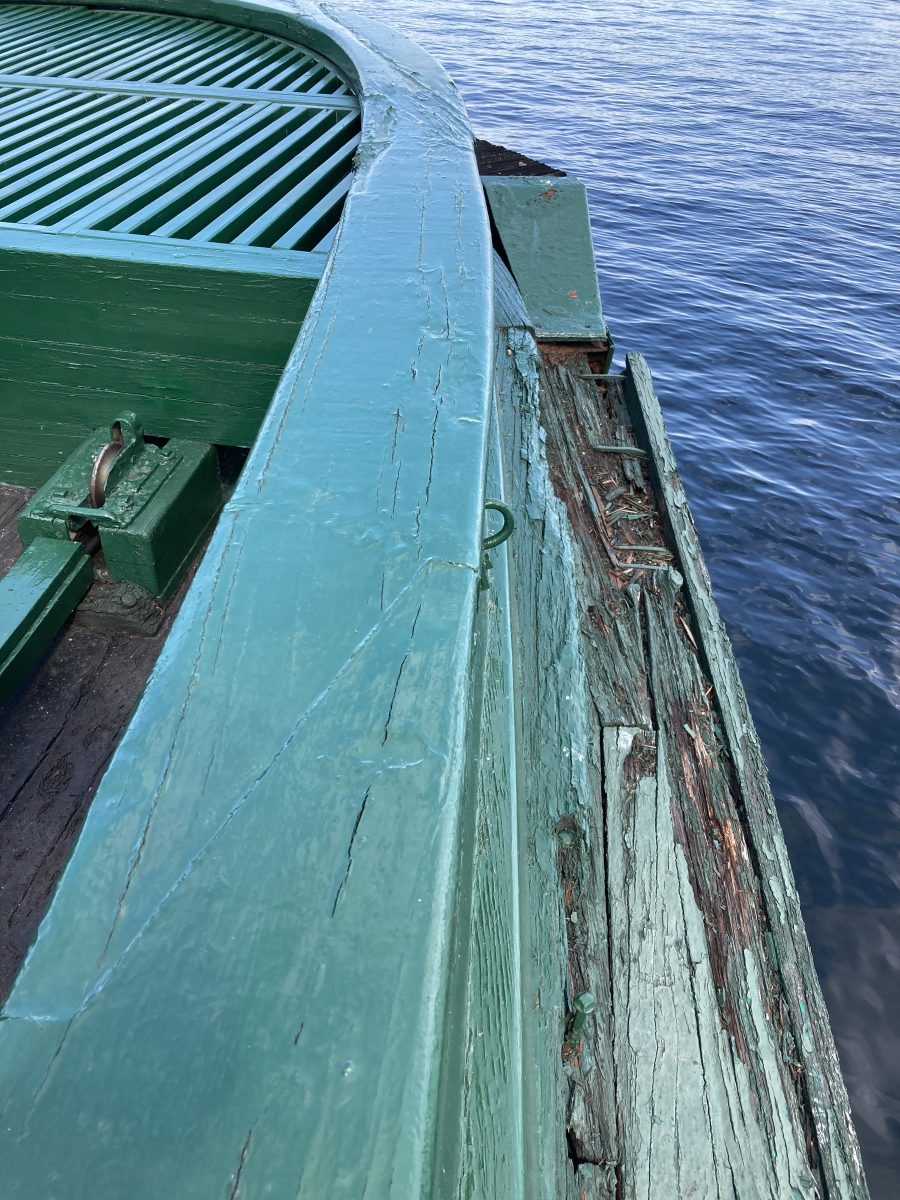
Tugs work hardest from the aft forward with all the towing cables, tow-pins and rudder action torquing the aft third of the boat. Slowly the boat comes apart. The Arthur was built in 1889–yes, that’s right–in the late 1800s as the Wallowa for the lumber trade hauling cargo over the bar on the Columbia River. Here are the historical documents for both the Klondike and the Arthur–now it’s time to marry these two together.
Foss Tug NHL Nomination 2 Klondike and Enabling Legislation
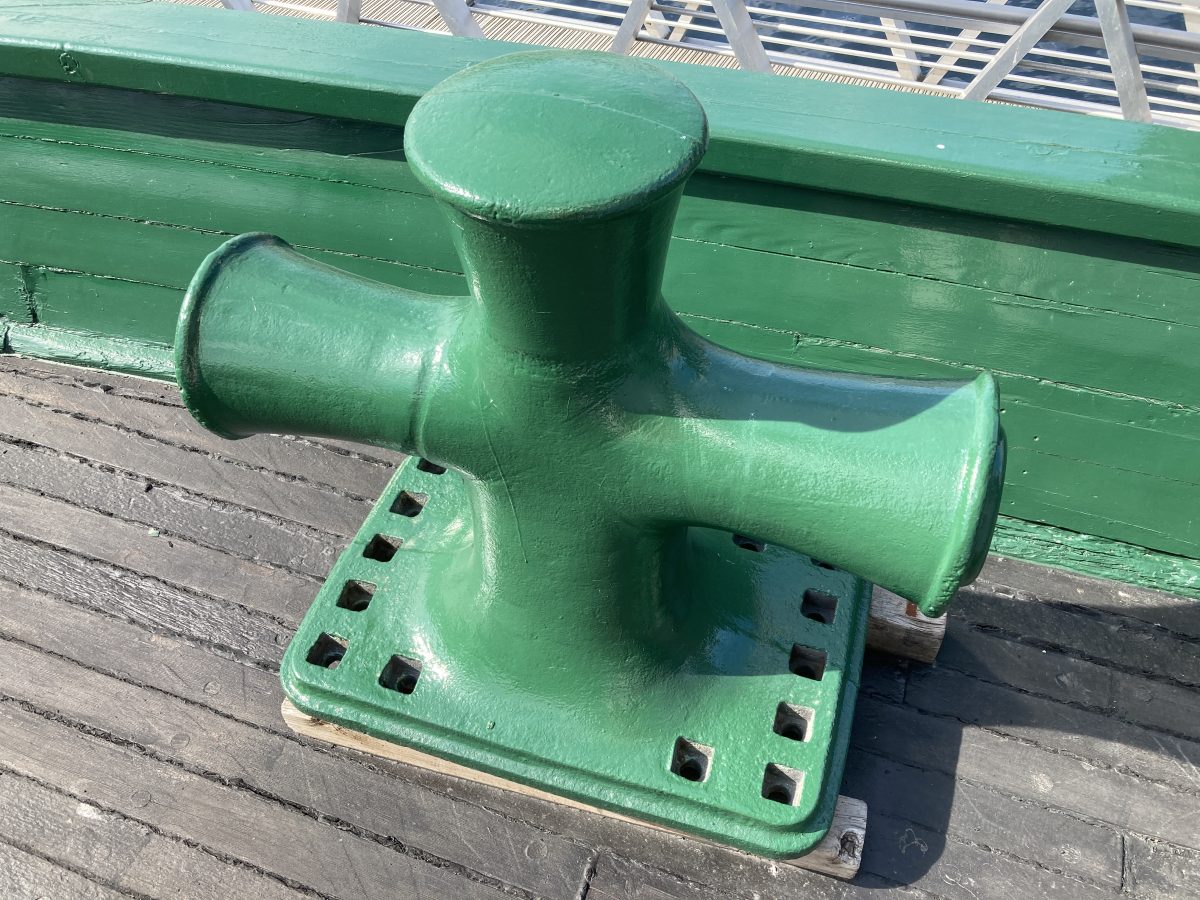
Her hardware is unique–not sure why all these square fastening holes are for. Below the deck is a broad timber called a “shelf” and this was likely drift holes for the many fasteners needed to secure this to the integrity of the hull. This vessel weighs in at about 350 tons.
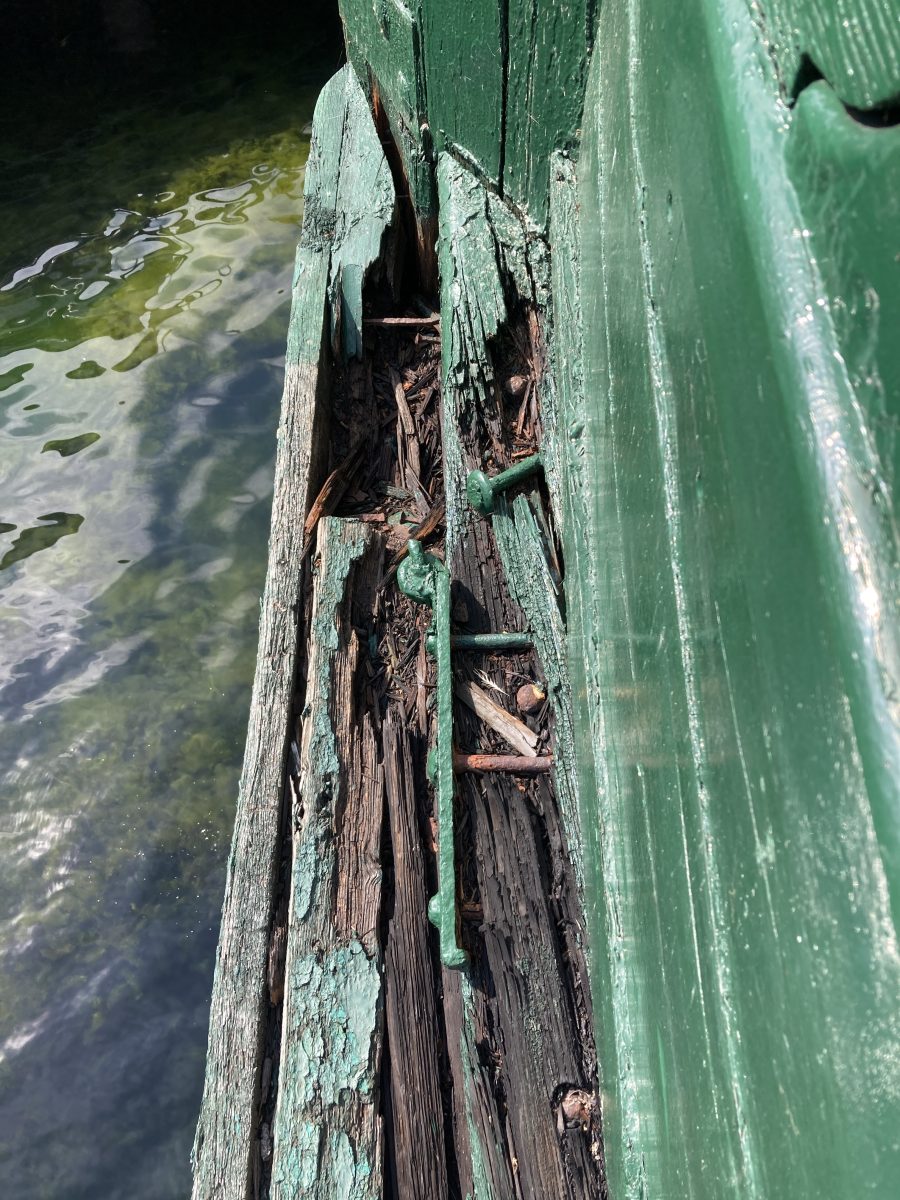
This actually is the easy part but should be done last. Compare with the photos below:
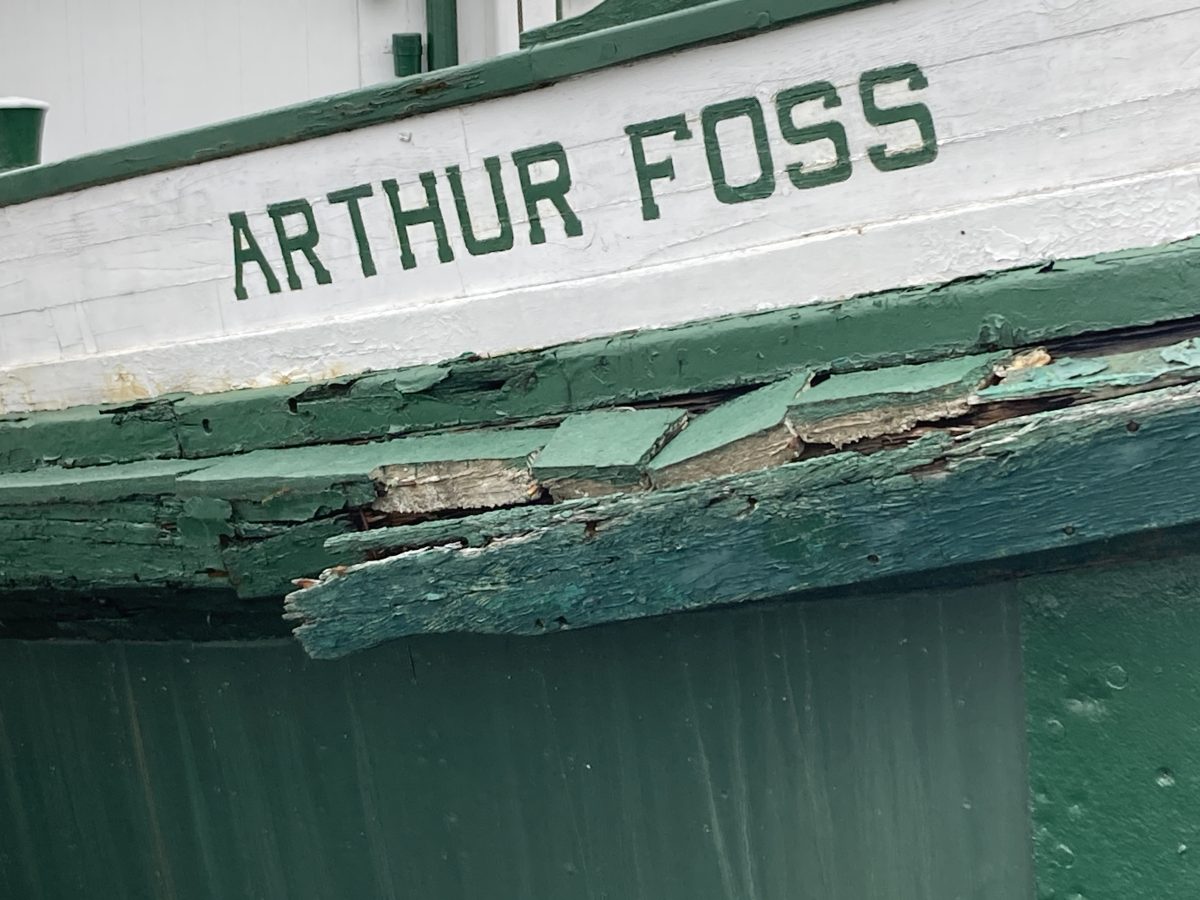
2021
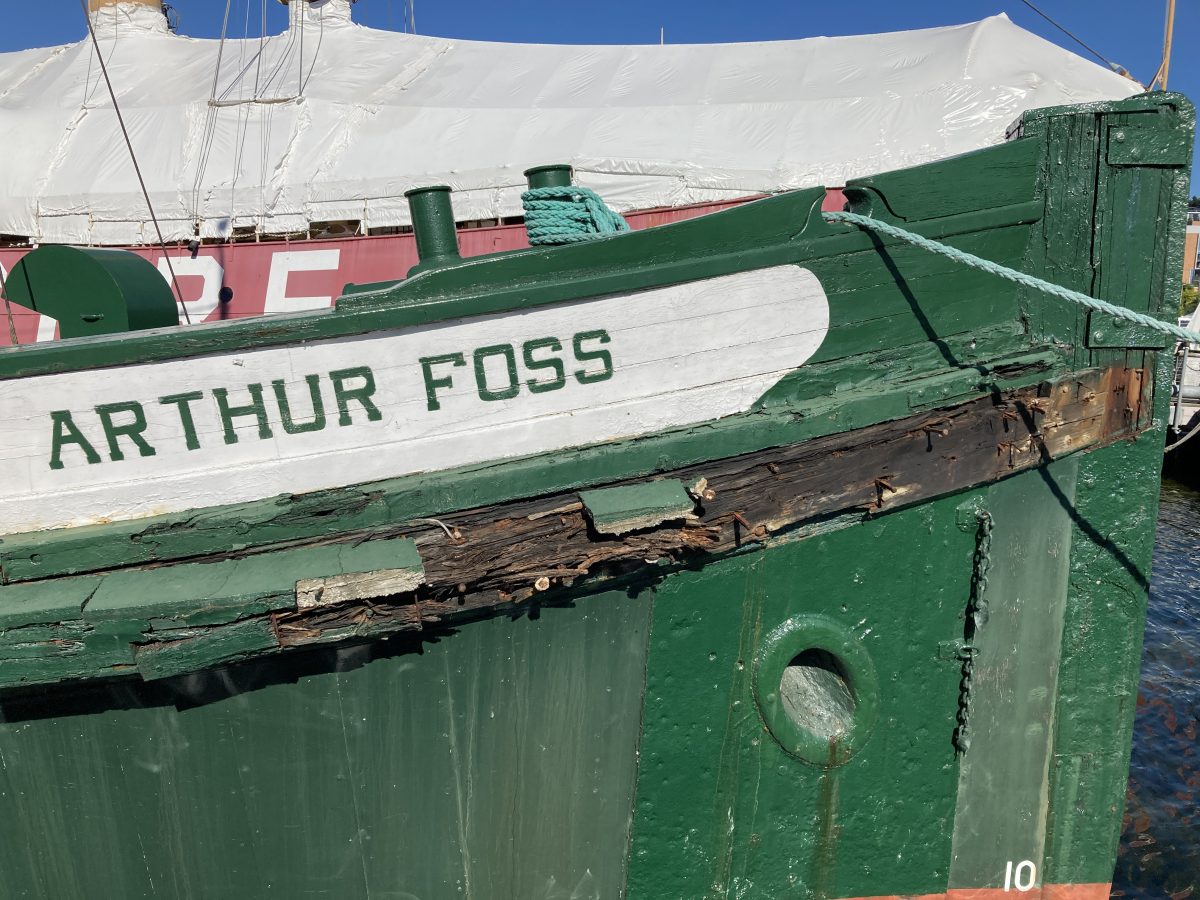
2023—I’m tired of seeing piece of the Arthur float away in the night. If the NPS takes on this endeavor, I will donate my 1899 (ten year younger!) which is fully restored to a Non-Profit and include an endowment to keep the ship up to current standards long after my departure. Let’s take pride in our historic treasurers.
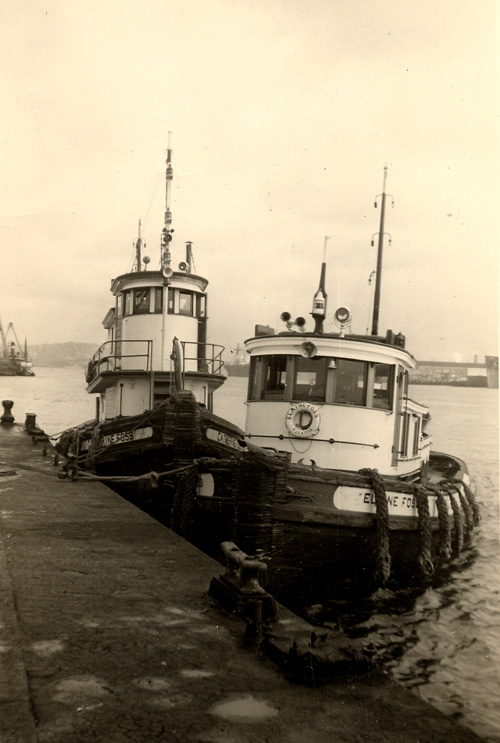
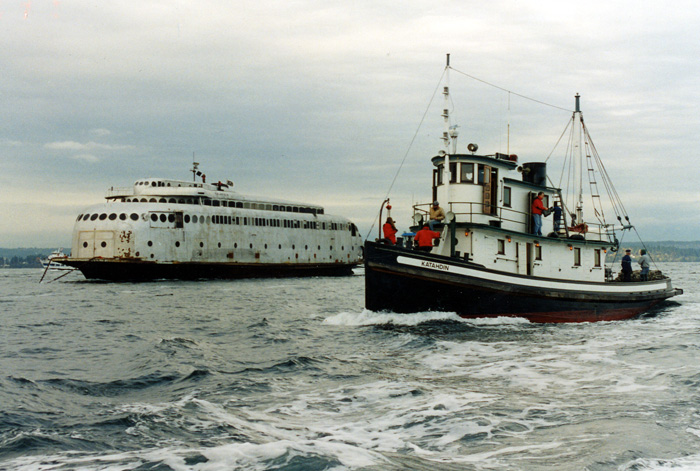
Katahdin in 1952 on the Seattle waterfront as the Catherine “Cat” Foss with the Elaine Foss and escorting Kalakala into Elliot Bay for a restoration that never happened. I pleaded with the city to cut the superstructure and drag it up on the beach at the South Lake Union Park. It was scrapped instead. Iconic as the Space Needle or Pike Place Market.
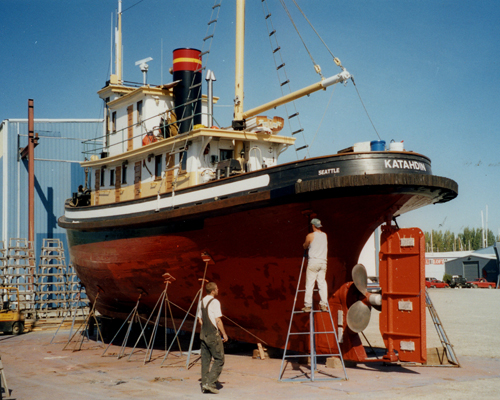
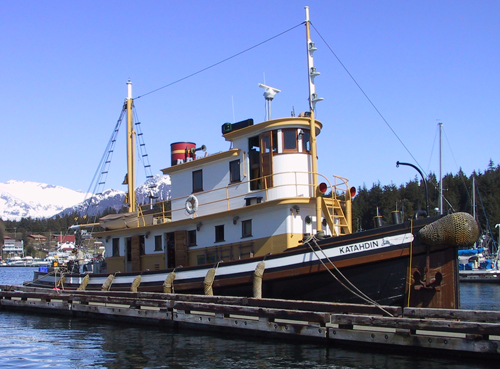
Katahdin during my restoration (Port Townsend 1996) and in Bella Bella, British Columbia in 2002 en-route to Alaska. I’ve made two trips to Alaska with Katahdin (the engine many more–it came out of the Elk, ex Foss #25). Why can’t Arthur and Katahdin make a pilgrimage back to Alaska on the 135th anniversary of the Klondike Gold Rush? I’ve posted several blogs here on Katahdin–use the search button to find them.
Stay tuned!